Ideas
How to Fact-Check AI-Generated Content: A Workflow for Video Scripts

By the StickTale team
· 11 min read
To fact-check AI-generated content, don't reread the draft and trust what sounds right. Pull every checkable claim into a list, trace each one to a source you open yourself, and rewrite or cut anything you can't confirm. Below is that workflow applied to a real AI-style draft, with source tiers, the red flags that catch most errors, a time estimate and a checklist.
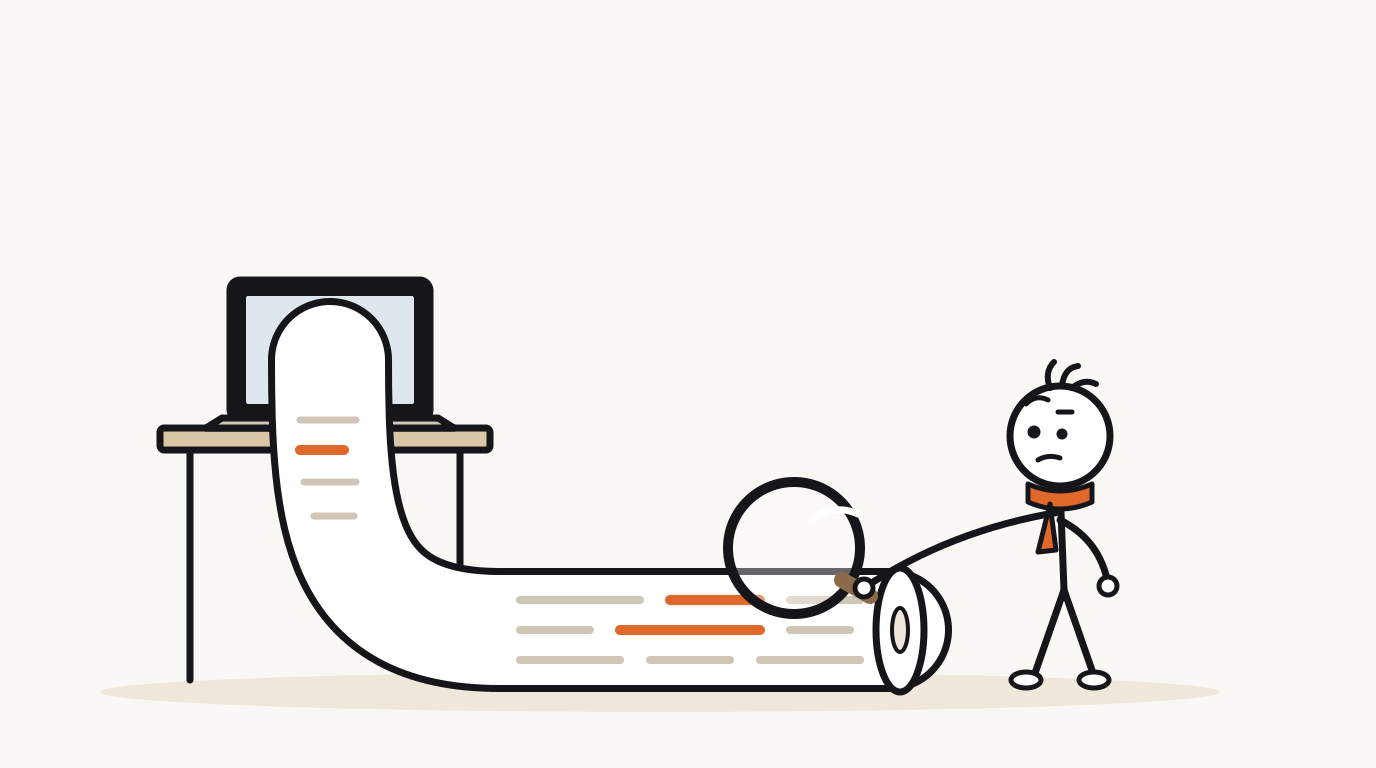
Why does AI-generated content need fact-checking?
Because a language model's job is to produce likely text, not checked text. An OpenAI research paper argues that models hallucinate partly because training and evaluation reward guessing over admitting uncertainty. A wrong answer that sounds confident scores better than "I don't know", so that is what you often get.
The numbers back this up. In a 2023 study of 636 citations, 55% of GPT-3.5's references and 18% of GPT-4's pointed to works that don't exist, and many of the real ones had errors. A 2025 study led by the EBU and BBC had journalists review more than 3,000 answers from four AI assistants: 45% had at least one significant issue, and 20% had major accuracy problems.
The cost of skipping the check is real. In 2023 a federal judge fined two lawyers and their firm $5,000 for filing a brief with court cases ChatGPT had invented. For a creator the penalty is softer but lasting: a confident error in a video stays online, and the comments remember it.
Step 1: How do you pull the checkable claims out of a script?
Go line by line and copy every statement that could be true or false into a list: names, dates, numbers, places, quotes, causes, and words like "first", "only" or "biggest". One sentence often holds two or three claims. Opinions and jokes stay out of the list, unless they rest on a fact.
Here is the method on a typical AI first draft about the Swedish warship Vasa. The draft below was written to show common AI errors; the verdicts come from the Vasa Museum's own account of the sinking.
| Draft line | Claim type | Verdict | Fix |
|---|---|---|---|
| "On August 10, 1628, the Vasa set sail on her first voyage." | Date | Confirmed by the museum. | Keep. |
| "Exactly one mile out, a gust of wind tipped her over." | Precise number | Unsupported. The museum says she sank "scant minutes" after setting sail; secondary sources disagree on the distance. | "Minutes after setting sail..." |
| "Water poured in through the open gun ports." | Cause | Confirmed: a stronger second gust pushed water through the open gunports. | Keep, and mention the second gust. |
| "All 150 people aboard drowned." | Number | Wrong. The museum says all but 30 of the crew and guests survived. | "About 30 people died." |
| "The king famously said, 'A ship is only as strong as its builder.'" | Quote | No source found anywhere. | Cut. |
| "Studies show 90% of warships of the era had the same flaw." | Statistic | No study named, round number, no source found. | Cut. |
| "She was top-heavy: too much ship above the waterline." | Cause | Confirmed: the museum describes upperworks too tall and heavy for the hull below. | Keep. |
Step 2: Which sources count? Use three tiers
Not every page that agrees with your script is evidence. Sort sources into tiers and aim to settle each claim with tier 1, or with two independent tier 2 sources. Tier 3 is for finding leads, never for the final answer.

When one source disagrees with another, go up a tier. In the Vasa draft, popular articles give different distances, while the museum gives none. The honest fix was to use the museum's wording instead of picking a number.
| Tier | Examples | How to use it |
|---|---|---|
| 1. Original record | The study itself, museum and archive pages, official policy pages, court records, government data | Settles a claim on its own if you read the relevant part. |
| 2. Expert secondary | Encyclopedias, university and museum explainers, established news outlets, review articles | Use two that don't copy each other, or follow them to tier 1. |
| 3. Leads only | The AI's own answer, Wikipedia, blogs, listicles, forums, quote sites | Use the citations they point to, then check those. |
Step 3: How do you verify each claim quickly?
Work through the list in order of risk, not in script order. Numbers, quotes and superlatives go first, because they are both the easiest to get wrong and the most likely to be repeated in comments. A claim is done when you can paste the source link next to it.
- Search the claim, not the topic. Use the most specific words: names, numbers, places. "Vasa sank 1628 how many died" beats "Vasa history".
- Open every citation the AI gave you. Confirm the page exists and actually says what the draft claims. In the 2023 citation study, even real references often had wrong details.
- Trace to the original. If a news article cites a study, find the study's abstract. If a page quotes a museum, go to the museum.
- Check quotes on a quote-tracing site. Quote Investigator, for example, found no substantive evidence that Einstein said "It's not that I'm so smart, it's just that I stay with problems longer", although the line is everywhere.
- Search existing fact-checks for viral claims. Google's Fact Check Explorer finds published fact-checks on a keyword and shows each publisher's rating.
- Check dates on anything "current". Policies, prices, records and "the latest" research change. Look for an updated date on the source.
- Log the result. Next to each claim, write the link and one word: confirmed, corrected or cut.
What red flags show an AI claim is probably wrong?
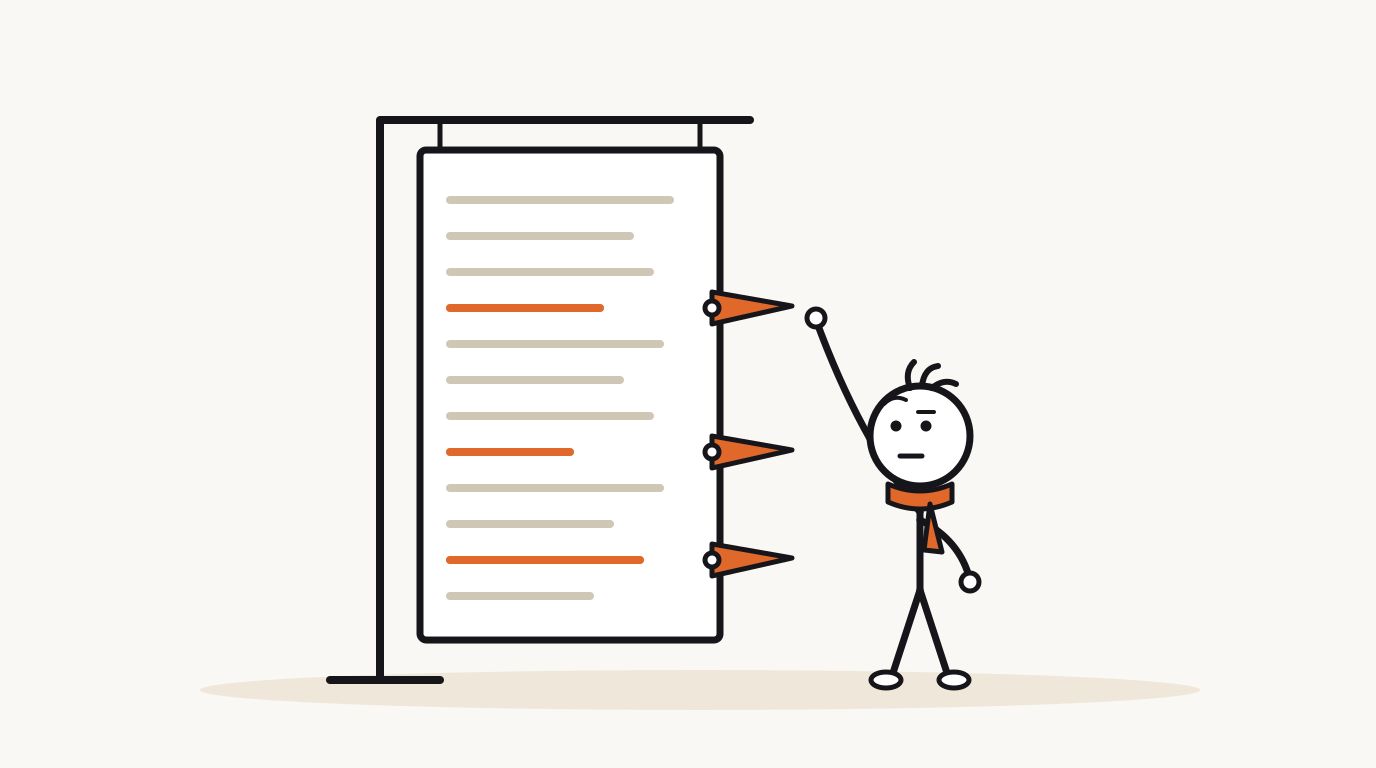
Some patterns show up again and again in AI drafts. None proves a claim false, but each one moves the claim to the top of your list. The Vasa draft above had four of them.
| Red flag | Example | Why it's risky | What to do |
|---|---|---|---|
| Round or oddly exact numbers | "Exactly one mile", "90% of warships" | Models produce plausible numbers; precise-looking figures hide guesses. | Find the number in a source or replace it with what the source says. |
| Unattributed or famous-person quotes | "The king famously said..." | Quotes drift to famous names over time. | Find the original document, date and speaker, or cut it. |
| "Studies show" or "experts agree" | "Studies show..." with no study named | There may be no study, or one small one. | Name the study and year, or cut the claim. |
| Superlatives and firsts | "The first", "the only", "the biggest ever" | Hard to prove and easy to disprove with one counterexample. | Use the qualifier your source uses, such as "one of the earliest". |
| Exact details for ancient events | A precise crowd size in 300 BC | Old records rarely give exact numbers. | Say "ancient writers claimed" and name them. |
| Citations you can't open | A journal article with no findable title | References are often fabricated. | Treat the claim as unsourced. |
| Neat answers to open questions | "Scientists finally know why..." | Models smooth over real debate. | Check whether the question is settled; if not, say so. |
| Percentages without a base | "Doubled the risk" | Doubled from what? A tiny base makes it trivial. | Find the before and after numbers. |
How do you fix a claim you can't verify?
You have four honest options. Cut it if the video works without it. Shrink it to what the source supports, like "minutes after setting sail" instead of "exactly one mile". Attribute it if a credible source makes the claim but you can't confirm it yourself: "according to the museum". Make the doubt the story when experts genuinely disagree: "Nobody agrees how far she got. Here's why."
Here is the Vasa script after the check. Every line now traces to the museum's account, and the ending still calls back to the opening.
Why did Sweden's mightiest warship sink in minutes? (fact-checked)
- 1628August 10, 1628. Sweden's new warship Vasa sets sail for the first time, in front of a crowd.
- GUSTMinutes later, a light gust of wind leans her over.
- GUNPORTSThen a stronger gust pushes her so far over that water pours in through the open gunports.
- 30 LOSTShe sinks right there in Stockholm harbor. About 30 people die.
- TOP-HEAVYThe wind wasn't the real problem. Too much ship sat above the waterline and too little below it.
- A ship built to show Sweden's power couldn't survive her own harbor.
How long does fact-checking a script take?
You can plan it from the word count. Narration runs at about 150 words a minute. If you assume one factual claim every 10 to 15 words, a 60-second Short holds roughly 10 to 15 claims; the Vasa draft had 7 claims in about 70 words, close to the dense end.
At 3 to 5 minutes per claim with good sources, a Short takes 30 to 75 minutes to check. A 10-minute video can hold 100 or more claims, so check it chapter by chapter as you write, not in one sitting at the end. These are planning estimates, so time your own first few checks and adjust.
| Video length | Words | Claims (approx.) | Checking time (approx.) |
|---|---|---|---|
| 45-second Short | 110 | 7 to 11 | 20 to 55 minutes |
| 60-second Short | 150 | 10 to 15 | 30 to 75 minutes |
| 3-minute video | 450 | 30 to 45 | 1.5 to 4 hours |
| 10-minute video | 1,500 | 100 to 150 | 5 to 12 hours, split by chapter |
Fact-check checklist: what to confirm before you record
Run this list on every script, whoever or whatever wrote it. Recording, drawing and captioning a wrong line costs more than checking it now, and the fix after publishing is a pinned correction at best.
- Claims listed: every name, date, number, place, quote and superlative is in your claim list.
- Sources opened: each claim links to a page you opened yourself, not one the AI described.
- Tier check: each claim rests on one original record or two independent expert sources.
- Numbers match: every figure in the script matches the source exactly, including units and dates.
- Quotes traced: every quote has a speaker, a date and an original source, or it's gone.
- Red flags cleared: no "studies show", no unsourced firsts, no round numbers you can't trace.
- Open questions labeled: anything experts still debate is presented as debated.
- Sources saved: the links go in your notes or the video description, so you can answer comments.
Questions
Can AI fact-check its own content?
Not reliably. Asking a model whether its answer is correct produces another generated answer, not evidence. Use AI to list the claims in a script or suggest where to look, then confirm each claim in a source you open yourself.
Why do AI tools make up facts?
Researchers at OpenAI argue that training and evaluation methods reward confident guessing over admitting uncertainty, so models fill gaps with plausible text. The result reads smoothly, which is why errors are easy to miss.
What tools help fact-check AI-generated content?
A search engine used for lateral reading does most of the work. Add Google's Fact Check Explorer for viral claims, Quote Investigator for quotes, and the original sources themselves: study abstracts, museum and archive pages, and official policy pages.
Do I need to disclose that AI helped write my YouTube script?
No. YouTube's altered or synthetic content policy lists using AI to draft scripts as production help that doesn't need disclosure. It does require disclosure for realistic content, like making a real person appear to say something they didn't. For monetization questions, see is AI content allowed on YouTube.
How many sources do I need for each claim?
One original record you have read, such as the study or the museum's own page, or two independent expert sources that don't copy each other. Three blogs repeating the same line count as one source at best.
Make your first stickman video
StickTale is in private beta. Join the waitlist and we’ll send your invite as soon as a spot opens.