Growth
How to Start a Faceless History YouTube Channel in 2026

By the StickTale team
· 11 min read
To start a faceless history YouTube channel, pick a narrow lane of history you can cover for a year, answer one specific question per video with sourced facts, and publish on a schedule you can sustain, using Shorts for discovery and long-form for watch hours. To get paid, you need to meet YouTube Partner Program thresholds, which rise for new applicants on February 1, 2027, and stay clear of its rules against inauthentic, mass-produced content. Here is how to set it up properly from the first upload.

How do you pick a history niche you can sustain?
"History" is too broad to build an audience around, because viewers subscribe for a promise they can predict. A lane tells them what the next video will feel like. Good lanes for narrated, illustrated history have three traits: endless material, questions that sound strange out of context, and scenes that are easy to draw.
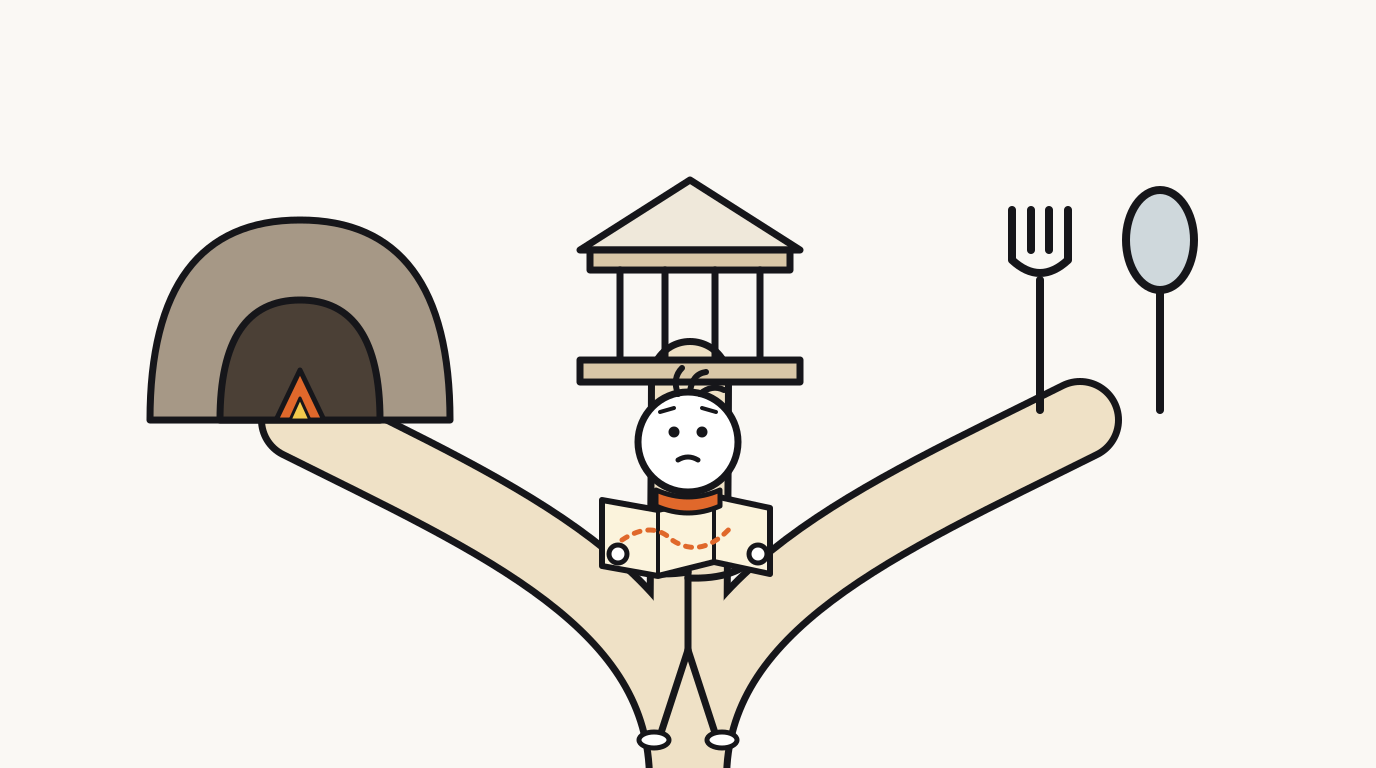
Here are five lanes that suit stick figure explainers, followed by a worksheet you can finish in one evening.
- Daily life in the past: what people ate, how they slept, what a medieval toothache meant. Relatable, so it travels well on Shorts.
- Strange laws and trials: animal trials, sumptuary laws, odd taxes. Built-in hooks.
- Disasters and their causes: what actually went wrong, step by step. Strong for long-form chapters.
- One civilization, deep: only Rome, or only the Ottoman Empire. Loyal audience, slower growth.
- The history of ordinary objects: forks, toilets, pockets, calendars. Easy to search for.
- Write down three lanes you would happily read about for a year without being paid.
- Give each lane 30 minutes and write as many video questions as you can. Under 12 means the lane is too narrow. If most could fit any history channel, it is too vague.
- Run the drawing test: can the key moment of each question be shown with one stick figure and one or two props? Cross out the ones that can't.
- Search five of the surviving questions on YouTube. Note how old and how long the top results are.
- Name two recurring series inside the lane, such as "History's worst jobs" or "Myth vs record".
- Pick the lane with the most questions left standing and commit to it for 90 days before judging it.
What should your first history videos be about?
The best history topics have a gap between what people assume and what happened. Mine for those gaps where curious people already ask questions: YouTube search autocomplete, history forums with moderated expert answers, museum and university blogs, and the reference lists at the bottom of encyclopedia articles.
Phrase every idea as a question with one odd detail: "Why did Roman emperors tax urine?" beats "Taxes in Ancient Rome". Then write a first line that makes the strange part impossible to ignore; our guide to writing hooks for explainer Shorts has formulas for that. Here are ten starter questions across three lanes, with the reason each one works.
| Lane | Video question | Why it works |
|---|---|---|
| Daily life | What did ancient humans do all night? | Everyone sleeps, so everyone has a guess |
| Daily life | What did a toothache mean in medieval Europe? | Instant wince; easy to draw |
| Daily life | How did people wake up on time before alarm clocks? | Ties the past to the viewer's morning |
| Daily life | What did Roman kids do for fun? | Unexpected angle on a familiar empire |
| Strange laws | Why did medieval courts put rats on trial? | Absurd premise, real records |
| Strange laws | Why did Rome tax urine? | The odd detail is the whole title |
| Strange laws | Why were some colors of clothing illegal to wear? | Sounds made up; opens a long-form topic |
| Ordinary objects | How did people brush their teeth before toothpaste? | Searchable and relatable |
| Ordinary objects | What did people use before toilet paper? | Curiosity people won't admit to searching |
| Ordinary objects | Where did the seven-day week come from? | Touches every viewer's calendar |
How do you source history facts so the comments don't tear you apart?
History audiences check. A wrong date or a repeated myth will be pointed out in the comments within an hour, and a pinned correction is the best you can hope for. Treat accuracy as a growth strategy, not a chore.
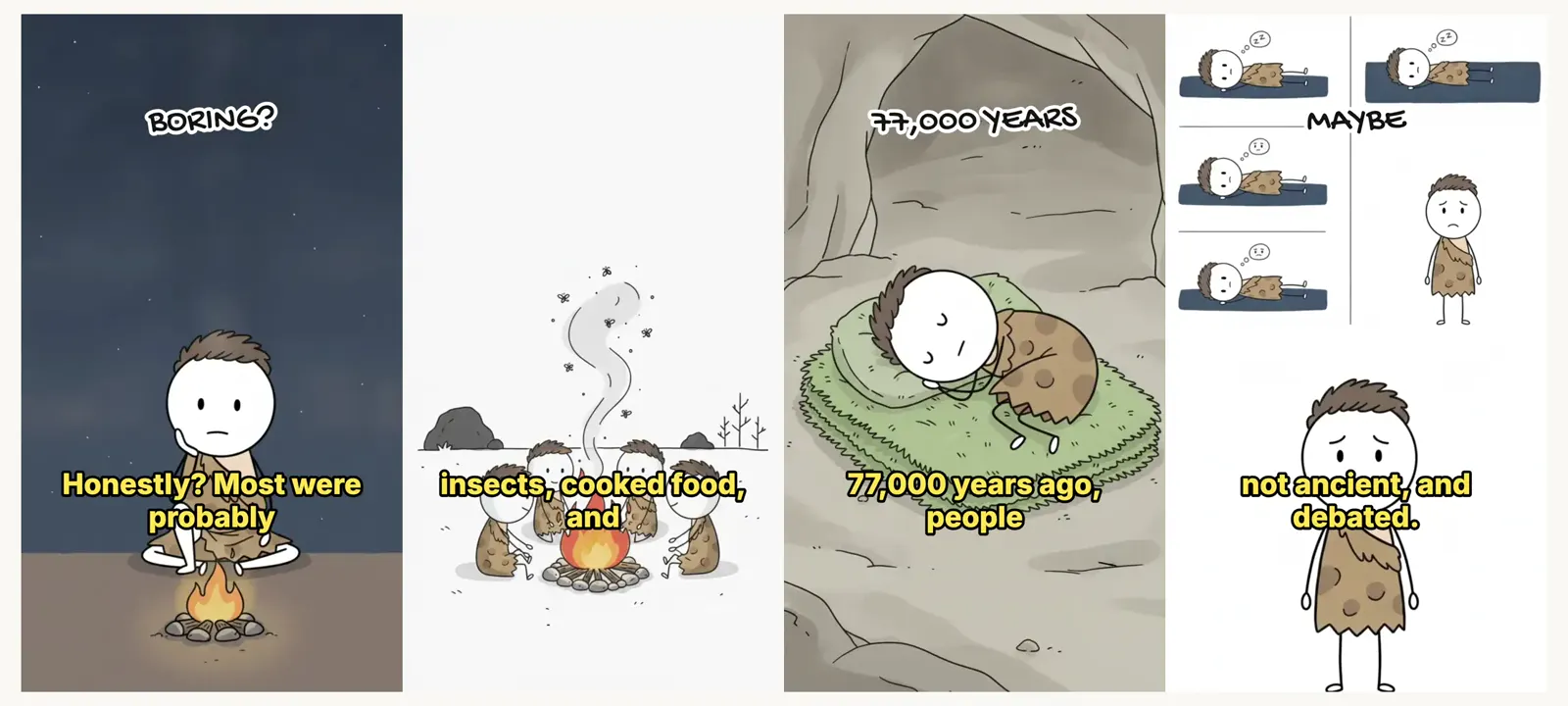
When evidence is thin, say so in the script: "according to the Roman writer Suetonius" or "historians still argue about this". It sounds more credible, not less. You can even put the doubt on screen, as in the real Short below.
- Three sources minimum, and at least one that is not a summary of the others.
- Prefer books by historians, university and museum pages, and articles that cite primary documents.
- Name the ancient writer when a story rests on one account.
- Mark disputed claims in the script with "may", "probably" or "historians disagree".
- Check every number (dates, distances, death tolls) against a second source.
- List your sources in the video description.
- Treat AI research as a first draft, and open the sources yourself before you record.
How do you stay clear of YouTube's inauthentic content policy?
This matters more for faceless channels than for anyone else. YouTube's channel monetization policies say monetized content must not be "mass-produced, generic, repetitive, or manipulative". In July 2025 YouTube renamed its "repetitious content" policy to "inauthentic content" and clarified that it covers repetitive and mass-produced videos.
The same page lists "AI-generated content made with generic or unoriginal templates" as not allowed, along with image slideshows and templated storylines with minimal or no narrative. It also says using AI is fine when the final product shows your creative vision, for example using AI to edit your scripts. A shared intro and outro is allowed if the bulk of each video is different, and so is a series where each video has a distinct storyline.
The policy applies to the whole channel. Reviewers may look at your main theme, most-viewed and newest videos, metadata and About section. So your channel needs a point of view a viewer could describe in one sentence.
- End each video with your own verdict or takeaway, not a summary.
- Add a joke, a comparison or a modern parallel that only you would make.
- Vary structure. If every upload has the same beats, length and closing line, it reads as a template.
- Publish fewer, better videos rather than a daily batch of near-identical ones.
Sample Short: the rats who got a lawyer (about 40 seconds)
- AUTUN, FRANCEAbout 500 years ago in Autun, France, the local rats were summoned to court.
- They were pests, and pests in this era could be tried by a church court.
- NO-SHOWThe rats did not show up. Their lawyer, Bartholomé Chassenée, had an explanation.
- EXTENSIONHis clients feared for their lives on the way. The court gave them more time.
- Courts also tried weevils, caterpillars and leeches, using exorcisms and holy water to drive them off.
- MY VERDICTMy verdict: the rats were never the point. A trial gave a scared town a process, and a process feels better than watching your crops disappear.
Shorts or long-form: what job does each do?
Shorts are discovery: a 50-second answer to a weird question can reach people who have never heard of you. Long-form is where loyalty, watch hours and most ad revenue come from, because viewers spend 8 to 15 minutes with your voice.
There is a counting rule to know. YouTube's Partner Program overview says qualified watch hours from Shorts views in the Shorts feed do not count toward the long-form watch-hour threshold. So a Shorts-only channel has to qualify through Shorts views instead.
A practical setup is to make each Short a self-contained piece of a bigger story you tell in long-form. The rats Short works on its own; the long video covers a whole year of medieval animal trials. If you are new to vertical video, our page on making YouTube Shorts covers the format.
What does a 90-day launch plan look like?
Consistency beats bursts. For one person, a sustainable start is two or three Shorts a week plus one long-form video every two weeks. Over 13 weeks that is roughly 30 Shorts and 6 long-form videos, which also keeps you well above the "3 public uploads in 90 days" rule for the lower Partner Program tier.
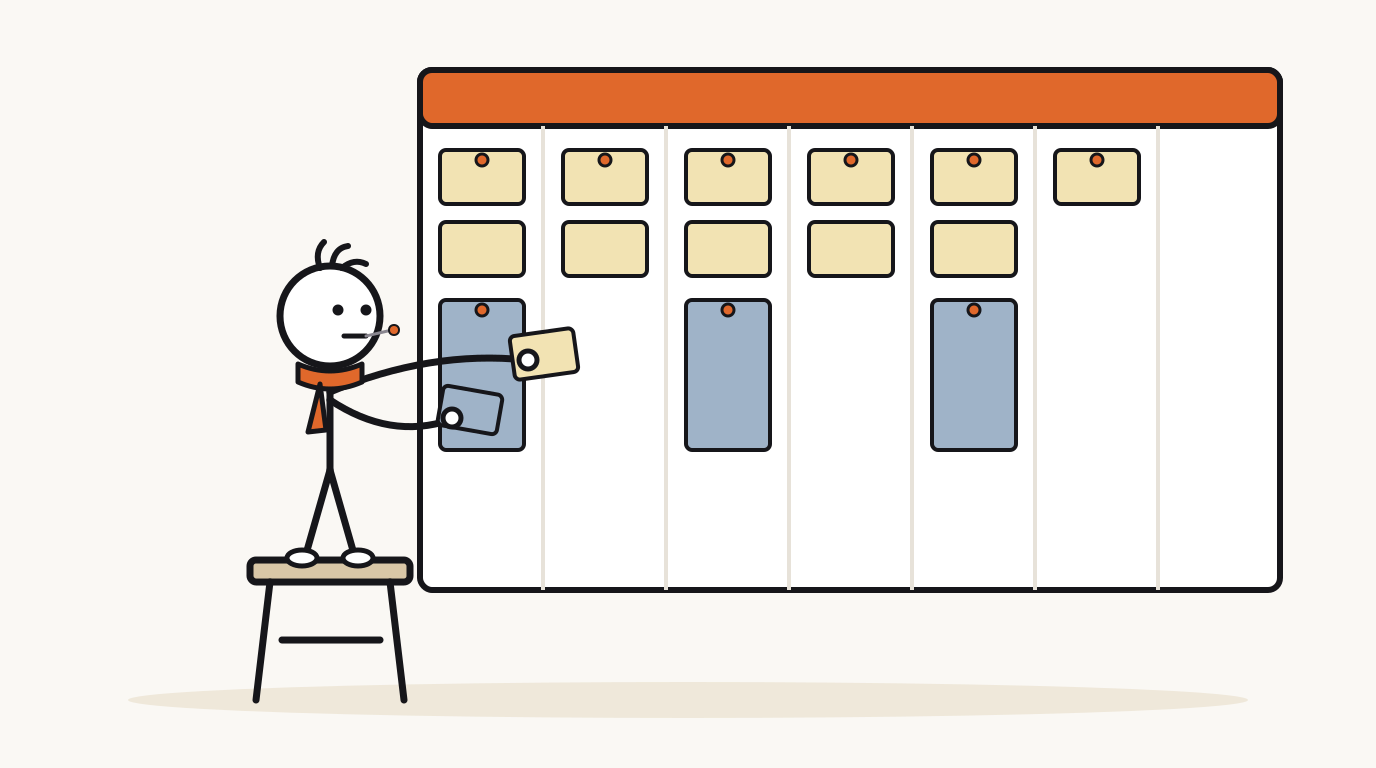
- Monday: pick and research the week's topics in one sitting.
- Tuesday: write and edit every script, adding your own verdict to each.
- Wednesday: produce the videos and fix any line or picture that feels off.
- Schedule uploads for the rest of the week and stop checking numbers daily.
| Weeks | Shorts | Long-form | Goal |
|---|---|---|---|
| Before launch | 0 (draft 6) | 0 (research 1) | Lane chosen, 30-question list, two series named |
| 1-2 | 3 per week | 1 | Learn the workflow; note which first lines hold viewers |
| 3-4 | 3 per week | 1 | Find the first Short that beats the rest; turn its topic into the next long video |
| 5-8 | 2-3 per week | 2 | Both series running; read the retention graph of each long video |
| 9-12 | 2-3 per week | 2 | Drop the weakest question style, double the strongest |
| 13 | Review | Review | Compare new subscribers per video by series, then set the next 90 days |
Where does a tool like StickTale fit?
Production is the part a tool can take off your plate. StickTale researches a history question with Google Search and lists the sources, writes a script that is fact-checked against that research, and draws every scene with the same stick figure. A 45 to 60 second Short takes about two minutes.
That leaves your time for the parts that make a channel yours and keep it on the right side of the policy: choosing topics, opening the sources, and rewriting lines in your own voice. You can rewrite any line (it is re-voiced automatically), redraw a single scene, and export a 1080p MP4 with alternative titles, a description and a thumbnail. For the wider picture of running a channel without showing your face, see our faceless YouTube channel guide.
What are YouTube's monetization requirements in 2026 and 2027?
YouTube has two entry levels today. The expanded YPP overview sets a lower tier for creators in eligible countries, including the US, that unlocks fan funding and shopping. Ad revenue sharing needs the higher bar in YouTube's Partner Program overview, and channels are reviewed after applying, which the page says typically takes about a month.

In August 2026 YouTube announced changes that start February 1, 2027. New applicants for ads and Premium revenue need double the watch hours or Shorts views; creators already in YPP are not affected by the new entry bar, and fan funding and shopping thresholds stay the same. The Partner Program page adds that members must accept the updated terms in YouTube Studio by January 31, 2027 to keep fully monetizing.
| Tier | Subscribers | Watch hours (or) | Shorts views (or) | Unlocks |
|---|---|---|---|---|
| Lower tier, now (plus 3 public uploads in 90 days) | 500 | 3,000 in 12 months | 3M in 90 days | Fan funding, shopping |
| Ad revenue sharing, now | 1,000 | 4,000 in 12 months | 10M in 90 days | Ads and Premium revenue |
| Ad revenue sharing, new applicants from Feb 1, 2027 | Not stated in the announcement | 8,000 in 365 days | 20M in 90 days | Ads and Premium revenue |
| Shorts ads and subscription revenue, from Feb 1, 2027 | YPP member | Not applicable | 10M in 90 days | Share of Shorts revenue |
Do you need to label stickman videos as AI?
YouTube's altered or synthetic content policy requires you to disclose AI-generated or altered content that seems realistic, such as making a real person appear to say something they did not, or generating a realistic scene that did not happen. It lists animation, clearly unrealistic content and using AI to help write a script as examples that do not need disclosure.
Stick figure drawings usually fall in that second group. If you add realistic imagery or imitate a real person's voice, turn on the disclosure in YouTube Studio.
Questions
Can a faceless history channel get monetized?
Yes, if it meets the Partner Program thresholds and follows YouTube's monetization policies. The risk for faceless channels is the inauthentic content policy, so each video needs real narrative, sourced facts and your own perspective rather than a repeated template.
Is it allowed to use AI for a history YouTube channel?
YouTube's monetization policies say using AI is acceptable when the final product shows your own creative vision, and give editing scripts as an example. What is not allowed is mass-produced content made with generic or unoriginal templates. Edit, fact-check and add your own angle to every video.
Do I have to label stickman videos as AI-generated?
YouTube requires disclosure for realistic altered or synthetic content. Its help page lists animation and clearly unrealistic content as not needing disclosure. Stick figure drawings are usually in that group, but disclose if you include realistic scenes or a voice that imitates a real person.
How many subscribers do you need to get paid on YouTube?
As of October 2026, 500 subscribers (plus uploads and watch time or Shorts views) unlocks fan funding in eligible countries, and 1,000 subscribers plus 4,000 watch hours or 10 million Shorts views unlocks ad revenue. From February 1, 2027, new applicants need 8,000 watch hours or 20 million Shorts views for ad revenue.
Should a new history channel start with Shorts or long videos?
Do both if you can. Shorts help new viewers find you, while long-form builds watch hours and loyalty. Shorts feed watch time does not count toward the long-form watch-hour threshold, so do not rely on Shorts alone if you are aiming for that path.
Make your first stickman video
StickTale is in private beta. Join the waitlist and we’ll send your invite as soon as a spot opens.