Scripting
How to Write an Explainer Video Script: Structure, Chapters and a Worked Outline

By the StickTale team
· 10 min read
To write an explainer video script for YouTube, start from one question, open with its strangest true detail, and answer it in four to six chapters that each end on the next question. Plan the length in words before you write: at a calm 150 words a minute, a 10-minute video is about 1,500 words. Close by calling back to your first line. Below is a word budget per chapter, a full outline for a real story, and the edits that matter most.
What makes a YouTube explainer script different from a product explainer?
Most guides on explainer scripts are written for marketing videos: name a pain point, present the product, show proof, end with a call to action. That shape works for a 60-second ad on a landing page. It fails on a YouTube channel, where nobody asked to be sold anything and every viewer can leave at any second.
A YouTube explainer has a different contract. The title asks a question, the video answers it, and the viewer stays because each answer opens a smaller question. YouTube's own retention report reflects this: one of its key moments is the share of viewers still watching after the first 30 seconds, and it flags dips where viewers abandon or skip.
So your script has two jobs that a product script doesn't. It has to earn the first 30 seconds with a promise, and it has to earn every chapter after that with a new question.
| Script type | Length | Goal | Shape |
|---|---|---|---|
| Product explainer | 60 to 120 s | A signup or sale | Problem, solution, proof, call to action. |
| Explainer Short | 45 to 60 s | One answer, watched to the end | Hook, partial answer, twist, payoff. |
| Long-form YouTube explainer | 5 to 15 min | A question fully answered, with time watched | Hook, promise, context, chapters with hinges, payoff, short outro. |
What is the structure of a long-form explainer script?
A long explainer has eight parts. Think of each chapter as a stepping stone: big enough to stand on, close enough that the next one is in view.
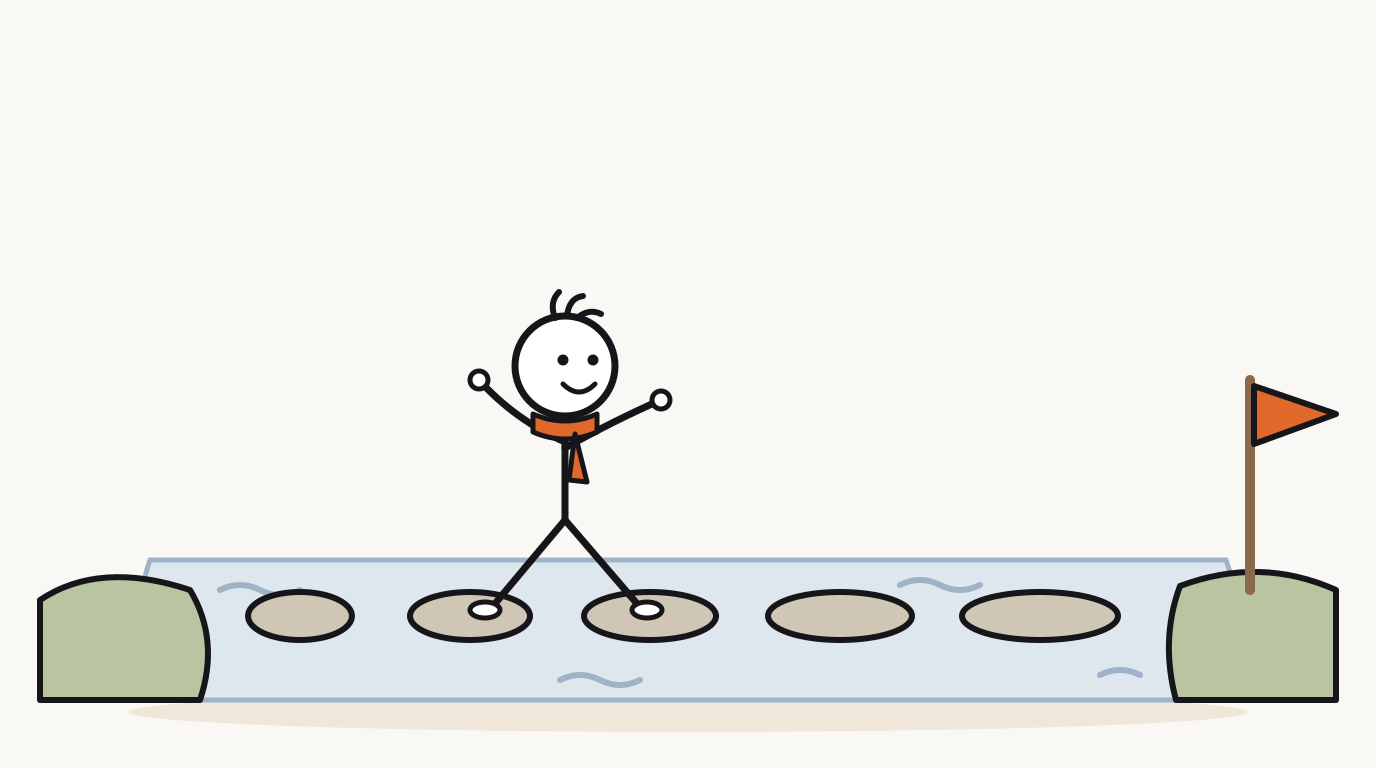
The chapters are where most of your words go. Each one answers a single sub-question, adds one new piece of evidence, and ends by raising the question the next chapter answers. If a chapter answers two questions, split it. If it answers none, cut it.
- Cold open (about 30 s): drop the viewer into the strangest moment of the story. No greeting, no channel intro.
- Promise (about 20 s): state the question in plain words and why the answer is worth ten minutes.
- Context (about 40 s): only the background the viewer needs to follow chapter one. Everything else waits.
- Chapters 1 to 4 (about 1:40 to 1:50 each): one sub-question per chapter, each ending on a hinge.
- Turn (inside the last chapter): the detail that changes how the viewer sees everything before it.
- Payoff (about 1 min): answer the title question fully, in one or two sentences the viewer could repeat.
- Callback: the last line echoes the cold open with new meaning.
- Outro (under 30 s): one sentence pointing to the next video. No list of social links.
How many words should each chapter be?
Plan from word count, not from minutes, because words are what you actually write. At a calm narration pace of about 150 words a minute (2.5 words a second), each minute of video costs 150 words, so a 10-minute video is about 1,500 words.
Here is how those 1,500 words split across the structure. Every time is the word count divided by 150. If you narrate faster or slower, time a 150-word paragraph out loud and scale the whole table by the same factor.
- 5-minute video: about 750 words, three chapters of about 170 words.
- 15-minute video: about 2,250 words, six chapters of about 300 words.
- Picture budget: at one picture every ~5 seconds, each picture carries about 12 words. A 250-word chapter needs about 20 pictures, which is a useful check on whether the chapter has enough to show.
| Part | Runs | Words | Pictures (one every ~5 s) |
|---|---|---|---|
| Cold open | 0:00 to 0:30 | 75 | 6 |
| Promise and context | 0:30 to 1:30 | 150 | 12 |
| Chapter 1 | 1:30 to 3:10 | 250 | 20 |
| Chapter 2 | 3:10 to 4:50 | 250 | 20 |
| Chapter 3 | 4:50 to 6:40 | 275 | 22 |
| Chapter 4 with the turn | 6:40 to 8:30 | 275 | 22 |
| Payoff and callback | 8:30 to 9:30 | 150 | 12 |
| Outro | 9:30 to 10:00 | 75 | 6 |
| Total | 10:00 | 1,500 | 120 |
A worked outline: a 10-minute explainer on the Boston molasses flood
Here is the structure applied to a real story: the Great Molasses Flood of January 15, 1919, when a storage tank in Boston's North End burst and released about 2.3 million gallons of molasses. All facts below come from that article and its cited sources.
Notice the right-hand column. Every chapter leaves a question open, and the next chapter's title is that question. That is the whole trick of long-form structure.
Cold open for the molasses flood (about 30 seconds)
- JAN 15, 1919January 15, 1919. Boston's North End. Lunchtime, and strangely warm for January.
- RIVETSThen a sound like machine-gun fire. Rivets popping out of a steel tank five stories tall.
- 2.3 MILLION GALLONSInside it: about 2.3 million gallons of molasses.
- Seconds later, a brown wave about 25 feet high is moving through the streets at an estimated 35 miles an hour.
- PAINTED BROWNAnd the strangest part isn't the wave. It's that this tank had leaked so badly for years that its owners painted it brown.
| Part | Words | What it covers | Question it leaves open |
|---|---|---|---|
| Cold open | 75 | A warm January lunchtime, a sound like gunfire, a wave of molasses about 25 feet high moving at an estimated 35 mph. | How does a city drown in syrup? |
| Promise and context | 150 | 21 people died and about 150 were injured. The promise: by the end, you'll know why nobody stopped it. | Why was there a giant tank of molasses in a neighborhood? |
| Ch. 1: Why molasses? | 250 | Molasses was fermented into ethanol, used in drinks and in munitions. The owner, USIA, had bought the Purity Distilling Company in 1917. | Who built the tank, and how well? |
| Ch. 2: The tank | 250 | A treasurer with no engineering background skipped a water test. The tank leaked from its first fill, so badly that it was painted brown. Locals collected the drips. | If it leaked for years, why did it fail that day? |
| Ch. 3: Why that day | 275 | The air warmed from about 2°F to 41°F in a day, and warm molasses had been added two days earlier. A 2014 analysis found the steel about half as thick as it should have been. | What does a wave of molasses do to a street? |
| Ch. 4: The wave (turn) | 275 | The wave knocks a streetcar off its tracks, flattens buildings and wrecks a firehouse. The turn: the company said anarchists had blown up the tank, and 119 residents sued. | Who paid, and did anything change? |
| Payoff and callback | 150 | After three years of hearings, the company was found responsible and paid $628,000. Construction rules changed to require sign-off from a licensed architect and engineer. Residents said the area smelled of molasses on hot days for decades. | (Closed: the warm day from the cold open returns as the smell on hot days.) |
| Outro | 75 | Point to a related video on another engineering failure. | Next video. |
How do you write transitions between chapters?
The weakest line in most long explainers is the one between chapters: "Now let's talk about the tank." It tells the viewer a section ended, which is exactly when they decide whether to leave. A dip in the retention graph right at a chapter boundary usually means the hinge was missing.
A hinge ends one chapter with an unanswered question or a surprising half-fact, so the next chapter starts already wanted. Write the hinge first, then write the chapter toward it.
| Signpost (weak) | Hinge (strong) |
|---|---|
| "Now let's look at who built the tank." | "The company needed a tank fast. The man in charge of building it had never built anything." |
| "Next, the weather that day." | "The tank had leaked for three years without bursting. So why that Wednesday?" |
| "Let's talk about the aftermath." | "The company had an explanation ready. 119 of its neighbors didn't believe it." |
How do you write a script for pictures, not just for the ear?
An explainer is narration plus pictures, so write both in the same pass. A two-column script, narration on the left and what the viewer sees on the right, stops you from writing lines that are impossible to illustrate, like "the economic situation was complex."
Learning research points the same way. Richard Mayer's multimedia principles, summarized here, include that people learn better from words and pictures than from words alone, and better when extraneous words, pictures and sounds are left out. For a script, that means one picture per idea and no decorative scenes.
- About 12 words per picture. At one picture every ~5 seconds, longer lines need two pictures.
- Labels name things, they don't repeat sentences. One to three words, so they work on mute.
- If you can't draw it, rewrite it. Abstract lines usually hide a concrete fact you haven't found yet.
| Narration | Picture | On-screen label |
|---|---|---|
| The company needed a tank, fast. | A stick-figure manager tapping a clock. | 1915 |
| The man in charge was its treasurer. He had no engineering training. | The same figure holding a ledger, looking at a blueprint upside down. | TREASURER |
| The standard test was to fill a new tank with water and check for leaks. It was skipped. | A hose lying unused next to the tank. | NO WATER TEST |
| From the first fill, it leaked. So it was painted brown. | A figure with a paint roller over a dripping tank. | PAINTED BROWN |
How do you edit an explainer script before recording?
First drafts of long scripts are almost always too long in the context and too short in the chapters. Most of the edit is moving words from the first two minutes into the middle. Then read it aloud with a timer, because a sentence that looks fine on paper often runs out of breath.
If you make videos with StickTale, you can pick YouTube 16:9 and a length up to 10 minutes, and the script is drafted around a hook, an open loop, escalation and a payoff that calls back to the hook. Treat that draft like any other first draft: run it through the checks below, rewrite lines, and each edited line is re-voiced automatically.
- Timing: read it aloud. If it runs long, cut context before chapters.
- Cold open: the strangest true detail is in the first two sentences.
- Promise: the title question is stated in plain words before 0:30.
- Hinges: every chapter ends on a question the next one answers.
- Turn: one detail late in the video changes the picture.
- Facts: every number and name has a source you opened. See how to fact-check AI scripts.
- Pictures: every line can be drawn as one clear scene.
- Callback: the last line echoes the first.
Questions
How long should an explainer video script be?
Count about 150 words per minute of narration. A 5-minute explainer is about 750 words, a 10-minute one about 1,500 and a 15-minute one about 2,250. Time a paragraph in your own voice and adjust, since narrators vary.
How many words is a 10-minute YouTube script?
About 1,500 words at a calm pace of 150 words a minute. A faster delivery of 170 words a minute fits about 1,700. Plan roughly 75 words for the cold open, 150 for promise and context, and 250 to 275 for each of four chapters.
How do you start an explainer video?
With the strangest true detail of the story, in the first sentence, and no greeting or channel intro. Then state the question the video will answer within the first 30 seconds, which is the point YouTube's retention report uses to measure your intro.
Should I add chapters to my explainer video?
For long explainers, yes. Write chapter titles as the sub-questions from your outline. YouTube needs the first timestamp at 00:00, at least three timestamps in order, and chapters of at least 10 seconds.
Does a YouTube explainer need a call to action?
Keep it to one sentence at the very end, ideally pointing to a related video. A long subscribe request at the start delays the hook, which is when viewers decide whether to stay.
Make your first stickman video
StickTale is in private beta. Join the waitlist and we’ll send your invite as soon as a spot opens.