Ideas
100 Explainer Video Ideas: Science, Psychology, Body and Money Questions That Hook

By the StickTale team
· 18 min read
The best explainer video ideas are specific questions with a surprising but settled answer, like why a steel ship floats, why half of viewers miss a gorilla in plain sight, or why a dollar bill is mostly cotton. Below are 100 of them across science, psychology, the human body and money, each with the answer in brief, why it hooks and how hard it is to explain accurately. After the lists you'll find how to pick one, how to turn it into a hook, and the accuracy traps in each field.
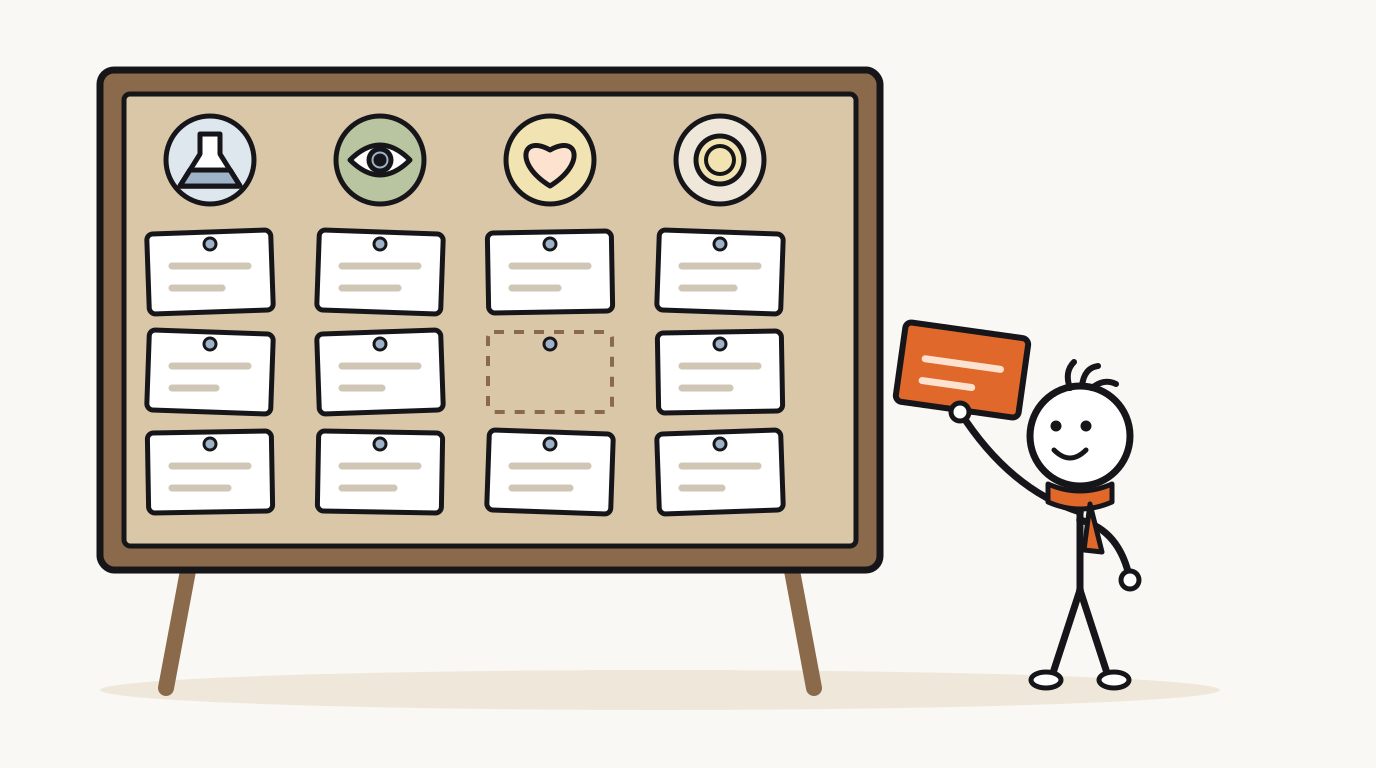
What makes a question a good explainer video idea?
Most results for "explainer video ideas" are about product videos for businesses: demos, testimonials and animated infographics. If you run an educational channel or post Shorts, you need something else: questions a curious person would ask, with an answer that is both surprising and settled.
Every idea on this page passed four tests. A question that fails one usually fails as a video, either because nobody clicks or because the comments fill up with corrections.
Each table rates difficulty. Easy means one mechanism and an obvious picture. Medium means two steps or a number you must check. Hard means an abstract mechanism or a popular wrong explanation you have to take apart first.
More than 30 of the answers were spot-checked against sources, which are linked in the tables; questions whose popular answer turned out shaky were cut, and a few appear in the pitfalls section instead.
- Specific: it names one thing you can draw. "Why does ice float?" beats "How does water work?"
- A gap: most viewers hold a wrong or blank guess before you answer.
- Settled: the core answer is in textbooks or backed by replicated research, not one headline study.
- Picturable: the explanation breaks into 6 to 12 simple scenes, one idea each.
What are good science explainer video ideas?
Physics and chemistry questions age well because the answers don't change. The strongest ones start from something the viewer has seen with their own eyes, like a red sunset, a fogged breath or a popping kernel.
| Question | Why it hooks (the answer in brief) | Difficulty |
|---|---|---|
| Why is the sunset red if the sky is blue? | Same cause: at sunset light crosses so much air that most of the blue is scattered away before it reaches you. | Easy |
| Why does ice float when most solids sink in their own liquid? | Water is the odd one out: frozen, its molecules lock into an open pattern that is less dense than the liquid. | Easy |
| Does a microwave heat food by "resonating" with water? | A popular myth. The field twists polar molecules back and forth, and 2.45 GHz is not a water resonance. | Medium |
| Why does popcorn pop? | Water inside the kernel turns to steam until the hard hull bursts. Quick and very visual. | Easy |
| Why do we only ever see one side of the Moon? | It does spin, exactly once per orbit, because Earth's gravity locked it. Most viewers assume it doesn't rotate. | Medium |
| Why do we need leap years? | A year runs about a quarter day past 365, and the century-year exception surprises people. | Easy |
| How do noise-canceling headphones make silence? | By adding sound: an inverted copy of the noise cancels it out. | Medium |
| Why don't birds on power lines get shocked? | Both feet sit at the same voltage, so no current flows through the bird. | Easy |
| Why does a shaken soda explode when you open it? | Shaking makes tiny bubbles that give the dissolved gas somewhere to escape all at once. | Medium |
| How can a steel ship float? | It pushes aside its own weight in water. Shape matters more than material. | Easy |
| What would happen if you fell into a black hole? | Tides stretch you thin, nicknamed spaghettification: a vivid image built on settled physics. | Medium |
| Why is glass see-through? | Visible light doesn't carry the right energy for glass's electrons to absorb, so it passes through. | Hard |
| Why is the sunlight you see about 8 minutes old? | 150 million km at 300,000 km a second is about 500 seconds (Smithsonian). A number viewers can check. | Easy |
| Why does salt melt ice on roads? | Dissolved salt lowers water's freezing point, which is also why it stops working in deep cold. | Easy |
| Why does pasta take longer to cook on a mountain? | Lower air pressure lets water boil below 100°C, so boiling water is cooler. | Medium |
| Why is Mars red? | Its dust is rich in iron oxide, the same family of compounds as rust. | Easy |
| Why do stars twinkle but planets mostly don't? | Moving air bends light from a point-like star; a planet is a tiny disk, so the wobble averages out. | Medium |
| Why is a rainbow always a curve? | Raindrops send colors back at about 42 degrees from the point opposite the Sun, which traces a circle. | Medium |
| Why don't we feel Earth spinning at about 1,670 km/h? | You only feel changes in speed. 40,075 km around the equator in about 24 hours gives the number. | Easy |
| Why does a curveball curve? | Spin drags air around the ball and creates a sideways push, the Magnus effect. | Medium |
| Why can you see your breath in winter? | Warm, moist breath cools fast and its water vapor condenses into a tiny cloud. | Easy |
| Why do onions make you cry? | Cutting mixes chemicals that form an irritant gas, and your eyes flush it out. | Easy |
| How do we know Earth is about 4.54 billion years old? | Not from Earth rocks alone: lead isotopes and meteorites date the solar system. | Hard |
| Why does a mirror flip left and right but not up and down? | It doesn't flip left and right; it reverses front and back. A brain-twister with a clean answer. | Medium |
| Why does a balloon stick to your hair after you rub it? | Rubbing moves electrons, leaving opposite charges that attract. | Easy |
What are good psychology explainer video ideas?
Psychology questions get high engagement because viewers can test themselves, but this is also the field where famous findings have failed to replicate. Every idea below rests on an effect that has held up or on a myth that research has clearly corrected.
Several are interactive by design. The Stroop test, semantic satiation and Troxler fading all work on the viewer while they watch, which turns a Short into an experiment.
| Question | Why it hooks (the answer in brief) | Difficulty |
|---|---|---|
| Why does a word sound fake if you repeat it 30 times? | Semantic satiation: repetition briefly dulls the link to meaning. Viewers can try it mid-video. | Easy |
| Why do you see faces in power outlets and clouds? | Pareidolia: the brain is tuned to spot faces fast, so it accepts false alarms. | Easy |
| Why does studying in short sessions beat cramming? | The spacing effect: gaps between sessions make memories last longer. Useful and true. | Easy |
| Why does testing yourself beat rereading? | Pulling a fact out of memory strengthens it more than looking at it again. | Easy |
| Would you give a wrong answer just because a group did? | In Asch's line studies, about 75% conformed at least once, though rates vary by era and culture. | Medium |
| Why does a random number change your next guess? | Anchoring: it held up in the large Many Labs replication project. | Medium |
| How do people miss a gorilla walking across the screen? | In the 1999 study, about half the viewers counting passes never saw it. | Easy |
| Why can't you spot big differences between two nearly identical pictures? | Change blindness: we store far less of a scene than it feels like we do. | Medium |
| Why do you think everyone noticed your embarrassing shirt? | The spotlight effect: wearers guessed about half the room noticed; under a quarter did. | Easy |
| Why does hearing a claim twice make it feel truer? | The illusory truth effect works even when people know better. | Medium |
| Why does a blurry dot fade away if you stare at the middle? | Troxler fading: unchanging input at the edge of vision gets filtered out. Works on screen. | Easy |
| Why is it hard to name the ink color of a color word? | The Stroop effect: reading is automatic and gets in the way. A test viewers do live. | Easy |
| Why did people argue over the colors of The Dress? | Brains guessed different lighting and subtracted it (NYU study coverage). | Medium |
| Why do people rank "bank teller and feminist" as likelier than "bank teller"? | The conjunction fallacy: a detailed story feels more likely than the broader category it sits inside. | Hard |
| Why does switching doors win twice as often in the Monty Hall problem? | The math is settled (2 in 3 versus 1 in 3), yet intuition says it shouldn't matter. Ideal for step-by-step pictures. | Hard |
| How many things can you really hold in mind at once? | Not seven: newer estimates are about 3 to 5 chunks. | Medium |
| Why are you sure where you were when big news broke, yet often wrong? | Flashbulb memories fade like others; only the confidence stays. | Medium |
| Do people really have "learning styles"? | There is no good evidence that matching teaching to a style helps. A clean myth correction. | Easy |
| Does listening to Mozart make you smarter? | A meta-analysis found little evidence for it. | Easy |
| Are some people left-brained and others right-brained? | Brain scans of 1,011 people found no such pattern. | Easy |
| Why do people "remember" a word that was never on the list? | In the classic study, the missing word ("sleep") was recalled about 40% of the time. | Medium |
| Why does watching lips change what you hear? | The McGurk effect: audio "ba" with video "ga" is often heard as "da". | Easy |
| Why does a hollow mask look like it's bulging toward you? | The brain's expectation that faces stick out overrides the depth cues. | Medium |
| Why do you like a song more after a few listens? | The mere exposure effect: familiarity tends to breed liking, up to a point. | Medium |
| Why does the ground seem to move after you stare at a waterfall? | The motion aftereffect: motion-sensing cells tire, and the still scene seems to drift the other way. | Easy |
What are good human body explainer video ideas?
Body questions work because every viewer owns the subject. The best ones start with a sensation people know, like pins and needles, a popping ear or a growling stomach, and end with a mechanism they didn't expect.
Keep them about how the body works. The moment a script drifts into "so you should take this," it has become health advice, which is a different and riskier kind of video.
| Question | Why it hooks (the answer in brief) | Difficulty |
|---|---|---|
| Why do your fingers wrinkle in the bath? | It's your nerves, not water soaking in: fingers with a cut nerve stay smooth. | Medium |
| Why do you get goosebumps? | Tiny muscles raise each hair, a leftover from fluffing up fur. | Easy |
| What makes the "hic" in a hiccup? | A sudden diaphragm spasm, then your vocal cords snap shut. | Easy |
| Why doesn't your stomach digest itself? | A mucus layer and bicarbonate shield the lining from acid. | Medium |
| Why do your ears pop on a plane? | A small tube equalizes the air pressure behind each eardrum. | Easy |
| Why does your voice sound strange on a recording? | You normally hear yourself partly through your skull bones, which adds lower tones. | Easy |
| Why don't you notice the blind spot in each eye? | Where the optic nerve leaves there are no light sensors, and the brain fills in the gap. Viewers can find theirs. | Easy |
| Are you really more bacteria than human? | Not 10 to 1: about 38 trillion bacteria to 30 trillion human cells. | Medium |
| How long does a red blood cell live? | About four months, then the body recycles it. | Easy |
| Why does your heart beat without your brain telling it to? | It has its own pacemaker cells that fire on their own. | Medium |
| Is 98.6°F really normal body temperature? | Average temperatures have drifted lower since the 1800s. | Medium |
| Why does a cut in your mouth heal faster than one on your skin? | Mouth tissue is primed for fast repair at the gene level. | Medium |
| Why does your stomach growl? | Muscle waves push gas and fluid along the gut, loudest when it's empty. | Easy |
| Why is carbon monoxide so deadly? | It grips hemoglobin roughly 200 to 250 times harder than oxygen does. | Medium |
| Why does your foot "fall asleep"? | Pressure squeezes nerves and blood vessels; pins and needles is the nerve recovering. | Easy |
| How does your inner ear know which way is up? | Fluid and tiny crystals inside it shift as your head moves and tilts. | Medium |
| Why is it hard to breathe on a mountain if the air is still 21% oxygen? | The percentage is the same; the air is thinner, so each breath holds less oxygen. | Easy |
| Why do some adults get sick from milk? | About 65% of people digest lactose less well after infancy. Drinking milk as an adult is the mutation. | Medium |
| Why does a bruise change color? | The body breaks down the trapped blood in stages, from purple to green to yellow. | Easy |
| Do identical twins have identical fingerprints? | No. Same DNA, different prints, because ridges form under conditions in the womb. | Easy |
| Why do veins look blue if blood is red? | Blood is always red; skin and the way light travels through it make deep veins look blue. | Easy |
| Is lactic acid why you're sore two days after a workout? | No. Lactate clears long before; soreness comes from small muscle damage and repair. | Medium |
| Why do babies have more bones than adults? | Roughly 270 to 300 at birth fuse into the adult 206. | Easy |
| Why does a smell fade after a few minutes in a room? | Smell receptors adapt to a steady scent so you can notice new ones. | Easy |
| What does a fever actually do? | The brain raises the body's temperature set point on purpose as part of fighting infection. | Medium |
What are good money explainer video ideas?
Money questions draw big audiences because everyone handles money but few people know how the system works. The ideas below are about mechanisms: why a coin has ridges, how a bank run unfolds, how a credit score is built.
Several facts here are US-specific and can change, such as deposit insurance limits and reserve rules. Name the country and the year on screen.
| Question | Why it hooks (the answer in brief) | Difficulty |
|---|---|---|
| Why is a piece of paper worth $100? | Modern money has value because of law, trust and the fact that governments accept it for taxes. | Medium |
| Why is a dollar bill closer to fabric than to paper? | It's 75% cotton and 25% linen, with no wood pulp. | Easy |
| Why do some coins have ridges on the edge? | Reeding stopped people shaving metal off gold and silver coins. | Easy |
| Why can't a country just print more money? | More money chasing the same goods pushes prices up. Zimbabwe's 100-trillion-dollar note was worth about US$30. | Medium |
| What actually is inflation? | Prices rising on average, so each unit of money buys less. How the basket is measured surprises people. | Medium |
| Why did the dollar stop being tied to gold? | In August 1971, Nixon suspended converting dollars into gold. | Medium |
| Do banks have to keep a share of your deposits in reserve? | US reserve requirements have been zero since March 2020. | Hard |
| Why does the government insure bank deposits? | The FDIC came out of the 1933 bank crisis; today it covers $250,000 per depositor, per bank, per ownership category. | Easy |
| How did Silicon Valley Bank collapse in two days? | Customers tried to pull $42 billion in a single day. | Hard |
| How is a credit score calculated? | Five weighted factors, led by payment history at 35%. | Medium |
| Who sets a stock's price? | Nobody does: it's the last price a buyer and a seller agreed on. | Medium |
| When stocks crash, where does the money go? | Mostly nowhere. Market value is price times shares, and the price fell. | Hard |
| What does a stock split change? | The number of shares and the price per share, not the company's total value. | Easy |
| Why do central banks raise rates to fight inflation? | Pricier borrowing slows spending, which eases pressure on prices. | Hard |
| How can an interest rate be negative? | In 2014 the European Central Bank started charging banks to park money with it. | Hard |
| Why do bond prices fall when interest rates rise? | An old bond paying 2% is worth less once new ones pay 5%. | Hard |
| How does an index fund work? | It buys everything in an index instead of picking. Explain the mechanics, not whether to buy. | Medium |
| Why do early mortgage payments go mostly to interest? | Interest is charged on the balance, which is largest at the start. A clean worked example. | Medium |
| How do "buy now, pay later" companies make money? | Mostly from fees merchants pay, not from shoppers. | Medium |
| Why do prices end in .99? | The left digit dominates: $2.99 reads as "two-something". | Easy |
| Why do airlines sell more seats than the plane has? | Some passengers predictably don't show up, and overbooking fills those seats. | Easy |
| Does a higher tax bracket tax all your income at the new rate? | No. In the US federal system each rate applies only to the slice inside its bracket. | Easy |
| What happens to the money when you tap a card at a store? | The store pays a small fee per payment, shared among the banks and the card network. | Medium |
| Why does the casino always win at roulette? | It pays as if there were 36 pockets; an American wheel has 38. That's 2 in 38, or 5.26%, kept on average. | Easy |
| How can insurance pay out more than you paid in? | Pooling: many people pay small premiums, and a few have large claims. | Easy |
How do you choose which question to make first?
Score each candidate from 1 to 3 on four things: how big the gap is between the common guess and the answer, how easily it turns into pictures, how solid the proof is, and how well it fits the length you make. The maximum is 12. Anything at 10 or above is ready; 7 to 9 needs a different format or more research.
Here is the rubric applied to three ideas from the tables. The Earth's-age question scores low for a Short, not because it's weak, but because the explanation has too many steps for 50 seconds. Hard ideas often make better long-form videos, which is the trade-off covered in Shorts vs long-form.
- Pick five questions from one table so your next videos build a series.
- Score each on the four criteria and drop anything under 7.
- For the top idea, find two sources that agree on the core answer.
- Write down the one number or detail that will carry the hook.
- Make the video, then the next highest scorer from the same table.
| Idea | Gap | Pictures | Proof | Fits a Short | Total |
|---|---|---|---|---|---|
| How can a steel ship float? | 2 | 3 | 3 | 3 | 11: make it now |
| Do banks have to keep a share of your deposits? | 3 | 2 | 3 | 2 | 10: make it, but script carefully |
| How do we know Earth is 4.54 billion years old? | 2 | 1 | 3 | 1 | 7: save it for long-form |
How do you turn a question into a hook?
The question is usually your title. The hook, the first spoken line, should add the surprising detail the title holds back, so the viewer gets something new in the first two seconds. For the full set of formulas, see nine hook formulas for explainer Shorts.
A practical method: find the single most surprising true detail in the answer, then put it first. The payoff in the last line should answer the title and echo that opening detail.
The sample script below uses that method on a body question. The hook states the myth viewers already half-believe, the third line opens the loop with a recount, each number gets its own scene and label, and the last line answers the title while echoing the opening "10% human". It runs 104 words, so at a calm 2.5 words a second it lasts about 42 seconds, which leaves room for a pause after the twist.
Are you more bacteria than human?
- You've probably heard that you're only about 10% human.
- 10 : 1?That bacteria in your body outnumber your own cells ten to one.
- RECOUNTIn 2016, a team of scientists decided to actually recount.
- 30 TRILLIONThey added up your cells, tissue by tissue: about 30 trillion human cells.
- RED BLOOD CELLSAnd most of those aren't muscle or brain. They're red blood cells.
- 38 TRILLIONThen the bacteria, most of them packed into your colon: about 38 trillion.
- ABOUT 1 : 1That's not ten to one. It's closer to one to one.
- So you're not 10% human. Counted cell by cell, you're a little under half human, and most of the rest lives in your gut.
| Question (title) | Hook (first line) | Payoff (last line) |
|---|---|---|
| Why is a dollar bill closer to fabric than to paper? | "The bill in your wallet has more in common with your jeans than with a newspaper." | "Three parts cotton, one part linen, and no wood at all. Your money is basically cloth." |
| Why does a blurry dot fade if you stare at it? | "Stare at the center of this screen. In a few seconds, part of it will disappear." | "Your brain filters out what doesn't change. Blink, and it comes right back." |
| Why is carbon monoxide so deadly? | "A gas that can build up in a home has no smell, no color and no taste." | "It doesn't attack your lungs. It takes the seats on your blood cells that oxygen was supposed to ride in." |
| Why do coins have ridges? | "Those little ridges on a coin's edge were added to stop thieves." | "Most coins today aren't worth shaving, but the anti-theft groove stayed." |
What accuracy pitfalls should you watch for in each field?
Every field has its own way of going wrong. In science, the familiar explanation is often the incorrect one. In psychology, a famous result may not have survived replication. In body and money videos, the risk is drifting from how things work into telling viewers what to do.
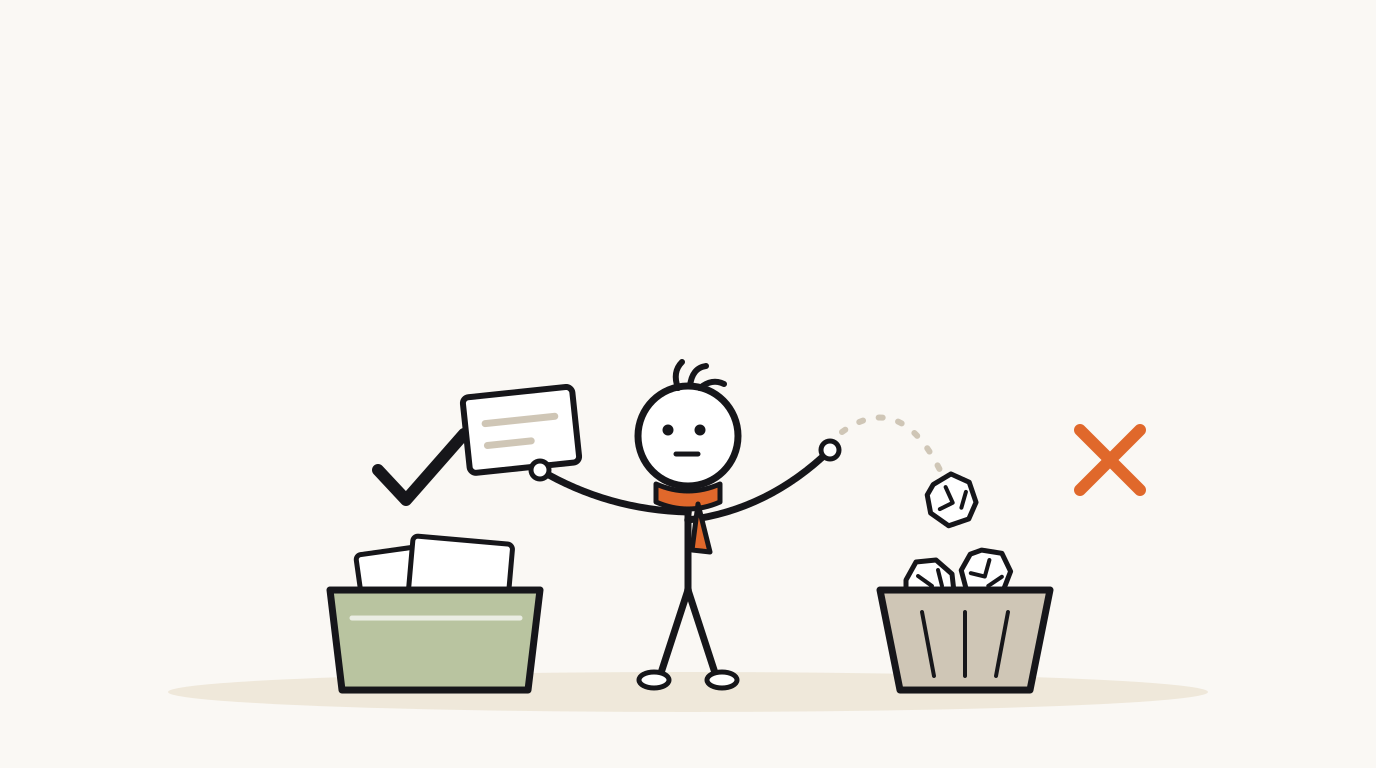
Before you record, run each claim through a quick verification pass; the workflow in how to fact-check an AI-written script covers it step by step. The table shows what to look for in each field.
| Field | Trap | Example | Safer move |
|---|---|---|---|
| Science | The popular explanation is wrong | The "equal transit time" story of airplane lift; even experts disagree on the best simple explanation. | Say which simple story is wrong and why, or pick a cleaner question. |
| Science | The "fact" is still debated | Whether hot water freezes faster than cold: a 2016 study found no reliable evidence, and others disagree. | Frame it as an open question, or skip it. |
| Psychology | The finding failed replication | Ego depletion: a 23-lab replication found an effect close to zero. | Search the effect name plus "replication" before you script it. |
| Psychology | A "bias" got revised | The hot hand: a 2018 reanalysis found a statistical flaw that reversed the classic conclusion. | Check for newer work before calling something a fallacy. |
| Body | "How" is settled, "why" isn't | We know nerves and blood vessels wrinkle your fingers; whether it evolved for grip is still being tested. | Separate the mechanism from the purpose on screen. |
| Body | Drifting into health advice | "So you should take vitamin X" at the end of a body explainer. | Explain how the body works and leave health decisions to doctors. |
| Money | Drifting into advice | "So you should buy index funds" at the end of a mechanics video. | Explain the machine; never recommend a move. |
| Money | Country and date drift | Deposit insurance limits, tax brackets and reserve rules differ by country and change over time. | Name the country and year on screen and in the description. |
Questions
What is a good topic for an explainer video?
A specific question with a surprising but well-established answer that you can show in simple pictures, such as "Why does ice float?" or "Why do prices end in .99?" It should name one concrete thing, challenge what most viewers assume, and have a core answer you can back with a reliable source.
How do I come up with explainer video ideas that won't run out?
Turn everyday experiences into "why" questions (a popping ear, a fogged breath, a price ending in .99), look for common myths that research has corrected, and read textbook chapter headings for mechanisms most people never learned. Group ideas by field so each video can lead into the next one in the series.
Can I make finance explainer videos without giving financial advice?
Yes, if you explain how things work and stop there. Showing how a credit score is weighted, why bond prices fall when rates rise or how a bank run unfolds is education. Telling viewers what to buy, open or cancel is advice, and it belongs to someone who knows their situation.
How do I know if a psychology finding is reliable?
Search the effect's name with "replication" and "meta-analysis". Findings that held up in large multi-lab projects or many independent studies, like anchoring or the spacing effect, are safer than results from one small study. If a big replication found an effect near zero, treat it as a myth to correct, not a fact to teach.
Are these ideas better for Shorts or long-form videos?
Most Easy ideas fit a 45 to 60 second Short because they have one mechanism and a clear picture. Hard ideas, like how we date the Earth or why central banks raise rates, usually need several steps and work better as long-form videos with room to build the explanation.
Make your first stickman video
StickTale is in private beta. Join the waitlist and we’ll send your invite as soon as a spot opens.