Scripting
How to Write Hooks for Explainer Shorts: 9 Formulas and Examples

By the StickTale team
· 11 min read
A good hook for an explainer Short is the first spoken line, and it does three things in about two seconds: names a specific subject, opens a gap between what the viewer believes and what is true, and promises that the video will close it. Start with the strangest true fact, skip the greeting, and save the full answer for the end. Below are nine formulas with true examples you can adapt, rewrites of weak hooks, and a full sample script.
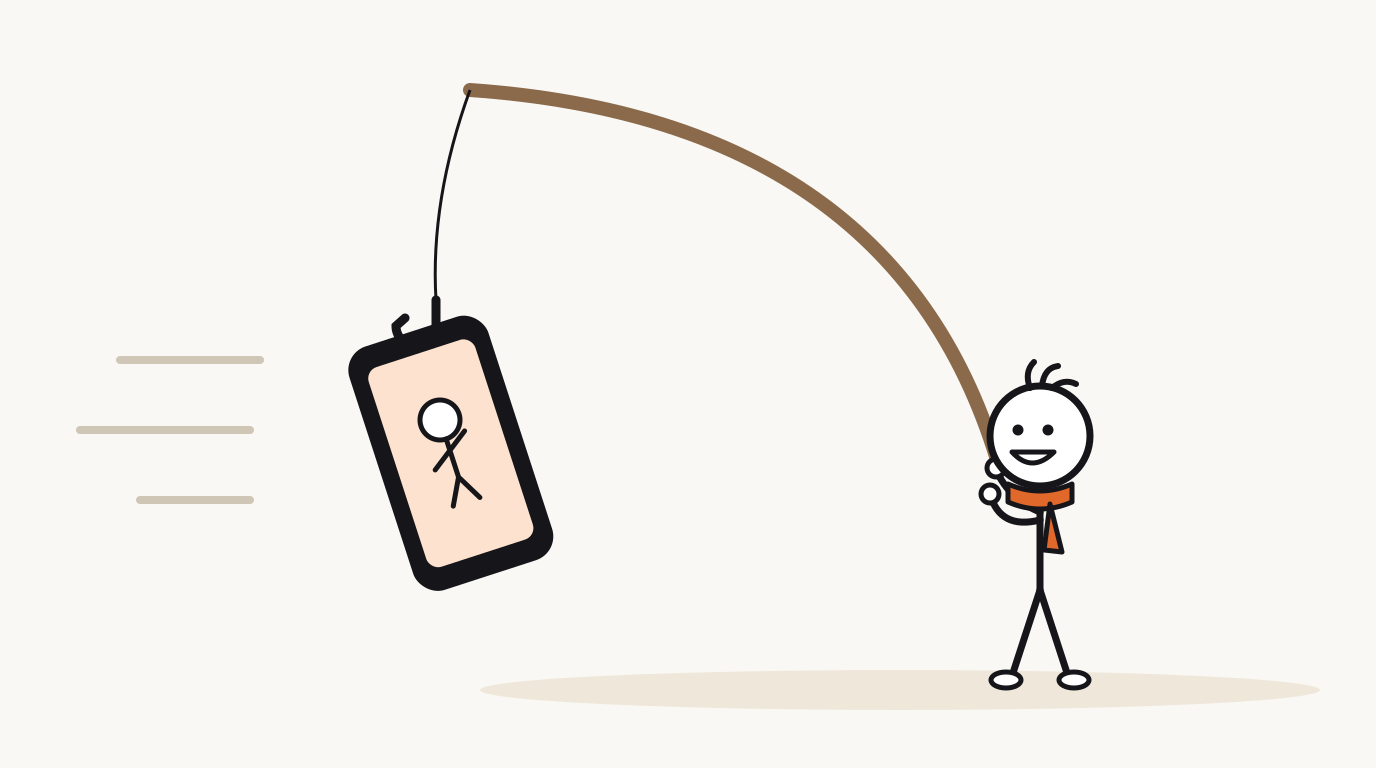
What does a hook need to do in the first two seconds?
On the Shorts feed, viewers decide almost instantly whether to keep watching or swipe. Your first line competes with everything else on their phone, so it cannot warm up. It has three jobs, and a hook that skips one usually loses the viewer.
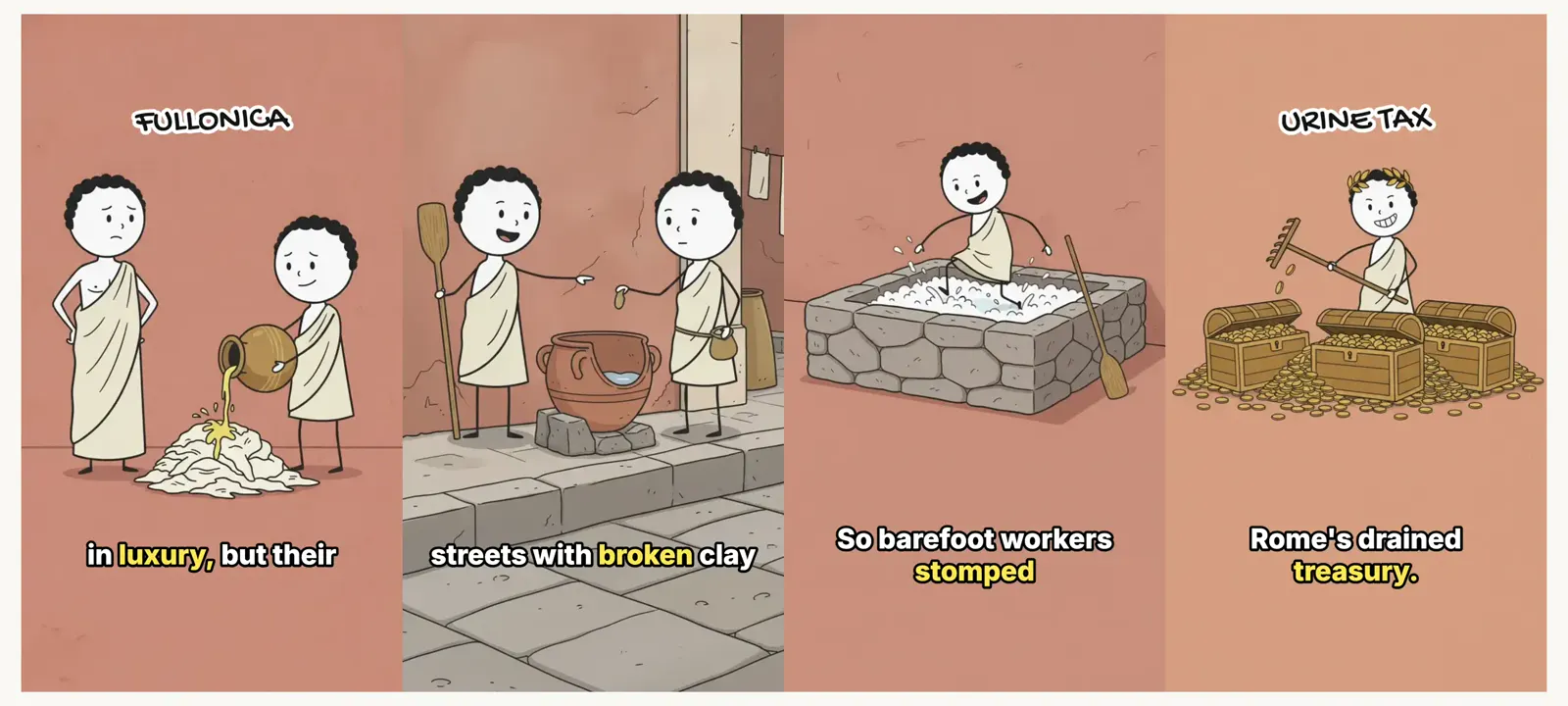
The first picture is part of the hook too. If the line is "Wombat poop is cube-shaped," the opening frame should show a confused stick figure holding a tiny cube, not a title card. Words and image should land together, so a viewer with the sound off still gets the gap.
- Make the subject concrete. "Roman laundry," not "ancient history." A named thing is easier to picture than a category.
- Open a gap. State something that clashes with what the viewer believes, so a question forms on its own.
- Signal a fast answer. The line should feel like the start of an explanation, not a riddle with no end.
Which hook formulas work for explainer Shorts?
Nine formulas cover almost every strong explainer hook. Each row gives a fill-in template and a history, psychology and science example, so you can see the same move work across niches.
Every example is true, and the newer ones link to a source. A hook only works over time if the payoff holds up, and myth and science videos attract viewers who know the subject.
| Formula | Template | History | Psychology | Science |
|---|---|---|---|---|
| 1. Impossible fact | [Subject] [does something that sounds impossible]. | "In ancient Rome, pee was taxed." | "Give someone a mug, and minutes later they'll want about twice as much to sell it." | "Octopuses have three hearts and blue blood." |
| 2. Weird-detail question | Why did [specific odd thing] happen? | "Why did a French town put a pig on trial for murder?" | "Why can't you tickle yourself?" | "Why is wombat poop shaped like a cube?" |
| 3. Time or scale shock | [A] is closer to / bigger than [B]. | "Cleopatra lived closer to the Moon landing than to the building of the Great Pyramid." | "Your brain is about 2% of your weight and burns about 20% of your calories." | "There are more trees on Earth than stars in the Milky Way." |
| 4. Myth correction | [Belief] isn't true. [Real story]. | "Napoleon wasn't short. A British cartoonist made him short." | "You don't use 10% of your brain. You use virtually all of it." | "Bulls don't charge the cape because it's red. They charge because it moves." |
| 5. You hook | You [do something everyday]. Here's the strange reason. | "You say a Roman dictator's name every summer. July is named after Julius Caesar." | "You walk into a room and forget why. The doorway might be the reason." | "Your body is slightly radioactive, and so is your banana." |
| 6. Cold open | It's [year]. [Someone] is in [a strange moment]. | "It's 1932. Australian soldiers aim machine guns at a flock of emus. The emus are about to win." | "It's 1848. An iron rod shoots through a railroad foreman's skull. Minutes later, he's talking." | "It's 1928. A scientist comes back from a holiday and finds mold killing the bacteria in a dish." |
| 7. Stakes | [Small thing] caused / almost caused [huge consequence]. | "In 1983, one Soviet officer decided a missile alert was false. He was right." | "Mistaken eyewitnesses played a part in most wrongful convictions later overturned by DNA." | "A mix-up between metric and imperial units sent a NASA spacecraft into Mars's atmosphere." |
| 8. Before and after | [Thing] starts as A. [Cause] turns it into B. | "The Statue of Liberty was the color of a new penny. The air turned it green." | "Learning London's streets made trainee cabbies' hippocampi grow." | "Flamingos are born gray. Something they eat turns them pink." |
| 9. Contrarian claim | [Common belief] is backwards. Here's the evidence. | "Medieval people bathed more than you think." | "Hitting a punching bag to vent anger made people more aggressive, not less." | "Venus isn't Earth's closest neighbor on average. Mercury is." |
How do you fix a weak hook?
Most weak hooks fail the same way: they spend the first seconds on something other than the idea. The fix is usually deletion, not cleverness. Find the strangest concrete detail in your script and move it to the first line.
Here are six common weak openings, why each one loses viewers, and a rewrite using one of the formulas above.
| Weak hook | What goes wrong | Rewrite |
|---|---|---|
| "Hey guys, welcome back! Today we're talking about Roman laundry." | Two seconds of greeting, then a topic with no gap. | "In ancient Rome, laundry workers cleaned togas with pee." (formula 1) |
| "Did you know octopuses are really weird?" | Promises a fact without giving one, and "weird" says nothing. | "Octopuses have three hearts, and their blood is blue." (formula 1) |
| "In this video, I'll explain why you forget things in new rooms." | Describes the video instead of starting it. | "You walk into a room and forget why. The doorway might be the reason." (formula 5) |
| "In the 1930s, farmers in Western Australia had a problem." | Context first; the strange part is buried. | "It's 1932. Soldiers with machine guns are about to lose to emus." (formula 6) |
| "This is the craziest fact about space." | A vague superlative that names nothing. | "Venus takes longer to spin once than to circle the Sun." (formula 1) |
| "Nobody knows why Napoleon was so short." | A false premise. Viewers who know better leave, and the rest get misled. | "Napoleon wasn't short. A British cartoonist made him short." (formula 4) |
How do you pay off a hook? A full sample Short
A hook is a promise, and the rest of the script keeps it. Don't answer in the second line, but don't stall either. Give partial answers that raise a new question, put the full answer near the end, and close with a line that calls back to the opening.
Here is a complete Short built on formula 2. The science comes from Sarah-Jayne Blakemore's cerebellum and robot-delay studies.
- Line 1, hook: the question, with no setup.
- Line 2, test: the viewer can try it, which turns watching into doing.
- Lines 3 to 5, partial answer: prediction explains it, but raises a new question: can you trick the prediction?
- Lines 6 and 7, escalation: the robot experiment answers that question with a twist.
- Line 8, callback: the hook comes back as a punchline.
Why can't you tickle yourself?
- Why can't you tickle yourself?
- TRY ITGo ahead, try it. Same fingers, same spot. Nothing.
- Here's the strange part: the touch is identical. What changes is your brain.
- CEREBELLUMEvery time you move, the cerebellum at the back of your brain predicts what that movement will feel like.
- NO SURPRISESensations it predicts get turned down. A tickle needs surprise, and you can't surprise yourself.
- ROBOTSo researchers tried to fool it. Volunteers moved a robot that tickled their own palm.
- DELAYWhen the robot added a tiny delay, the same movement started to tickle. The longer the delay, the more it tickled.
- So you can't tickle yourself for the same reason you can't sneak up on yourself. Your brain always sees you coming.
How long should the hook and the payoff be?
You can plan timing from word counts. Assume a calm pace of about 150 words a minute, or 2.5 words a second. The tickle script is 118 words, so it runs about 47 seconds.
Its hook is 5 words, about 2 seconds. That is the target: one sentence, under about 12 words, said in two to three seconds. A second sentence should open the loop, not explain the first.
| Beat | Seconds | Words | Job |
|---|---|---|---|
| Hook | 0 to 3 | about 6 | One strange, specific line. |
| Open loop | 3 to 10 | about 15 | Make the viewer need the answer. |
| Partial answer | 10 to 25 | about 40 | Explain half, raise a new question. |
| Escalation or twist | 25 to 38 | about 30 | The detail they didn't see coming. |
| Payoff and callback | 38 to 45 | about 20 | Answer fully, echo the first line. |
How should a title and hook work together?
On long-form YouTube, the title and thumbnail get the click and the hook confirms it was the right click. On Shorts, many viewers never see the title before the video starts playing, so the first line carries more of the load. Either way, the title and hook should be partners, not copies.
A useful rule: the title states the question, the hook adds a new detail. The viewer gets something new in the first second, which tells them the video will keep delivering.
| Title | Hook | What the hook adds |
|---|---|---|
| The emperor who taxed pee | "Roman laundries cleaned togas with urine, and Emperor Vespasian saw a business opportunity." | Why a tax was even possible. |
| Why doorways make you forget | "You were holding the thought ten steps ago. Then you crossed a doorway." | Puts the viewer inside the moment. |
| The war Australia lost to birds | "The soldiers had machine guns. The emus had a strategy." | The absurd matchup, in two beats. |
| Why Venus has the weirdest day | "On Venus, the Sun rises in the west, and you'd wait months to see it set." | A concrete image instead of a claim. |
| Why you can't tickle yourself | "Go ahead, try it. Nothing happens." | An action the viewer takes right now. |
| Our closest planet isn't Venus | "Venus gets closer to Earth than any other planet. Mercury is still our nearest neighbor." | A paradox that only the video can resolve. |
How do you test which hook works?
Write three hooks for every Short before you pick one, each from a different formula. Read them out loud. The one that makes you want to hear the next sentence wins, and the runner-up can open a related video later.
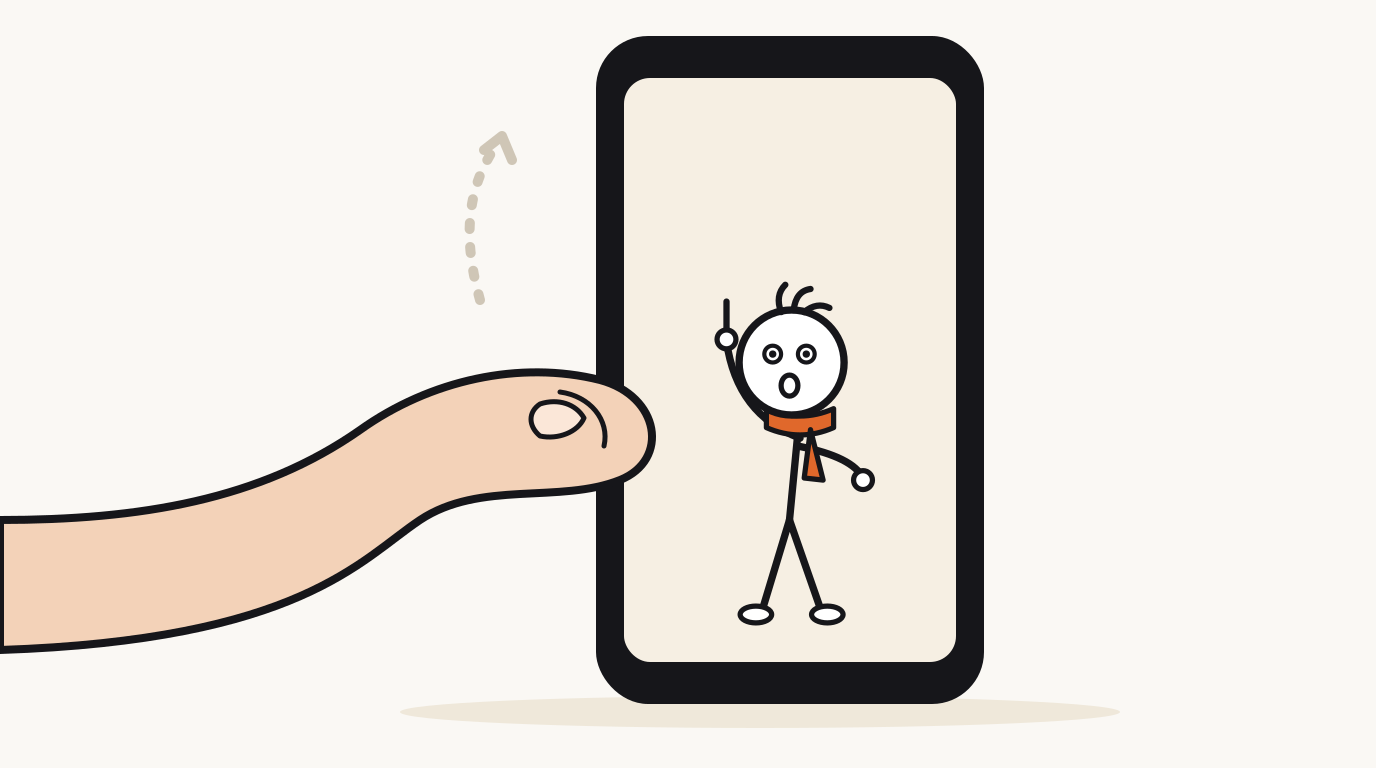
After posting, open the Shorts metric in YouTube Studio that shows how many viewers kept watching versus swiped away. One Short tells you little. Compare your last ten by formula, and you will likely find two or three that beat the rest. For topic ideas per niche, see psychology explainer videos and YouTube Shorts.
- Pick the strangest true detail from your research notes.
- Write it as three hooks using three different formulas from the table.
- Read each one aloud and time it. Cut anything over three seconds.
- Pick one and post. Note which formula you used.
- After ten Shorts, compare the kept-watching share by formula and drop the weakest one.
Hook checklist: what to check before you record
Run every first line through this list before you record. A strong hook only buys a few seconds; the pictures and pacing have to keep them, which is why stickman explainers go viral on more than the first line.
- Specific: it names a real person, place, animal, object or number, not a category.
- Strange: it clashes with what a typical viewer believes.
- True: you can point to the source that backs it up, and the payoff will.
- Short: one sentence, under about 12 words, spoken in two to three seconds.
- No warm-up: no greeting, no "In this video", no "Did you know".
- Not the title: it adds a detail the title doesn't give.
- Picture matches: the first frame shows the strange part, so it works on mute.
- Callback ready: you know which last line will echo it.
Questions
How long should a YouTube Shorts hook be?
One sentence, ideally under about 12 words, spoken in two to three seconds. At a typical narration pace of about 2.5 words a second, that is 5 to 8 words. If it needs a second sentence, that sentence should open the loop, not explain the first one.
What is the best hook for an educational Short?
A surprising, specific and true fact stated without setup, like "Octopuses have three hearts and blue blood." It works because it creates an immediate question that only the video answers.
Should I start a Short with "Did you know"?
Usually not. It delays the actual fact and is heavily overused. Remove those three words and start with the fact itself; that is usually a better hook already.
What is an open loop in a YouTube Short?
An open loop is a question the video raises early and answers late, so the viewer keeps watching to close it. In an explainer, the hook opens it, partial answers keep it open, and the last line closes it with a callback to the first.
How do I know if my hook is working?
In YouTube Studio, check how many Shorts viewers kept watching versus swiped away, and compare that across videos that use different hook formulas. Judge patterns over about ten Shorts, not single videos.
Make your first stickman video
StickTale is in private beta. Join the waitlist and we’ll send your invite as soon as a spot opens.