Growth
How to Grow a Faceless YouTube Channel: The First 1,000 Subscribers

By the StickTale team
· 11 min read
To grow a faceless YouTube channel, give viewers something to come back for that isn't a face: a recurring character, a recognizable voice and named series of videos. Publish at a pace you can keep for months, package every video with a clear question and a consistent thumbnail style, link Shorts to longer videos, and judge progress by returning viewers and subscribers per 1,000 views rather than by any single video. The first 1,000 subscribers come from that system repeating, not from one lucky upload.
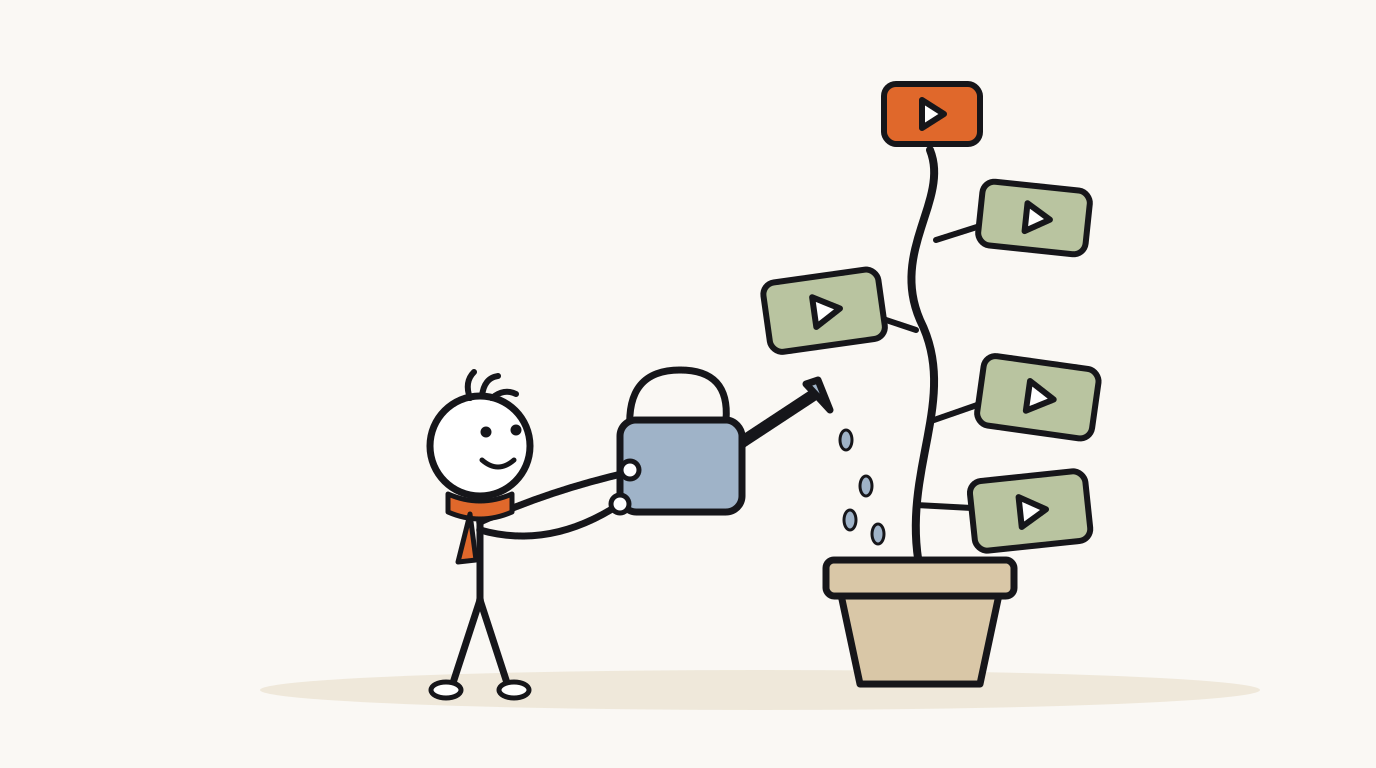
What actually grows a faceless YouTube channel?
YouTube's performance FAQ describes its recommendation system in a useful way: it "doesn't promote videos to your audience but rather finds videos for your audience when they visit YouTube." Growth comes from viewers choosing your videos and staying, not from the algorithm deciding to favor you.
The same idea shows up in YouTube's recommendation system help page, which lists the signals it learns from: which videos people choose to watch, ignore or dismiss, how long and how much of a video they watch, survey responses, likes, shares and comments. Every one of those is about the viewer's experience, which is good news for a faceless channel. None of them requires you to be on camera.
What a faceless channel does lack is the easiest reason to come back: a person viewers like. You replace it with three things that repeat in every video.
- A recurring character. The same stick figure, same costume color, same expressions, so viewers recognize your videos at a glance.
- A consistent voice. One narrator and one tone, whether calm, dry or playful. Viewers subscribe to a voice they want to hear again.
- Named series. Recurring formats that promise "more like this", which is the strongest reason to subscribe.
Why do series grow a channel faster than one-off videos?
A one-off video asks a viewer to like one topic. A series asks them to like a format, and a format can produce a hundred episodes. YouTube's recommendation help page advises creators to "develop content series to encourage continued viewing", and its audience analytics tips suggest that when one type of video keeps getting many views, you should consider "creating a similar series".
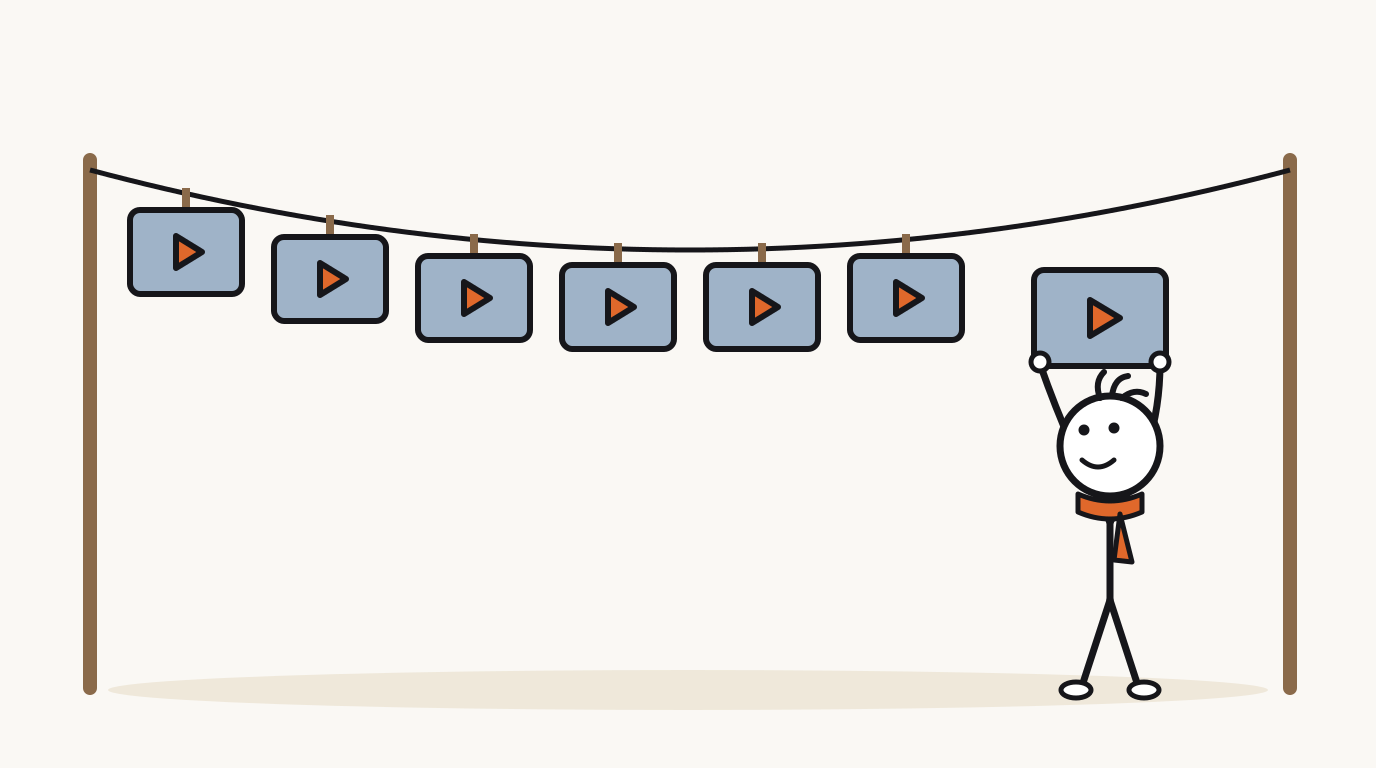
YouTube also gives series a formal home. Its shows help page explains how to turn a playlist into a show, including a Shorts series, where the playlist must contain only Shorts of up to 180 seconds. Viewers who find an episode in their feed get a "watch series" button that lets them move to the previous or next episode.
| Channel | Series name | Promise to the viewer | Episode examples |
|---|---|---|---|
| History | Jobs that vanished | One strange job, how it worked, why it ended | Lamplighters, ice cutters, knocker-uppers |
| History | Who was right? | Two sides of an old argument, then a verdict | Edison vs Westinghouse, the longitude prize |
| Psychology | Your brain did that | An everyday glitch explained in a minute | Hearing your name in a crowd, phantom phone buzzes |
| Psychology | The famous experiment, revisited | What a classic study found and what came after | The marshmallow test, the bystander effect |
| Money | What it really costs | The hidden cost behind an everyday thing | Making a penny, a free airline snack |
| Money | Money myths | A common belief, then the evidence | "Renting is throwing money away", "Lottery winners always go broke" |
How often should a new faceless channel upload?
Less often than you fear, as long as it's steady. YouTube's performance FAQ says its analysis "found that growth in views across uploads is not correlated with time between uploads", and the recommendation help page advises: "Prioritize consistent quality content over a high frequency of uploads." The same page says taking a break doesn't get a channel penalized.
Consistency still matters, but for viewers more than for the algorithm. People who subscribe to a series expect the next episode. A rhythm like "a new Short every Tuesday and Friday, a long video every other Sunday" is easier to keep, and easier for viewers to learn, than bursts of daily uploads followed by silence. For Shorts-specific cadence, see how often to post YouTube Shorts.
How do you package videos when there's no face?
On most channels the host's face sells the thumbnail. On a faceless channel, packaging has to do that with a question and a character. The title names something specific and strange, the thumbnail shows one subject and one reaction, and the first spoken line adds a detail neither of them gave away.
Then repeat the style. The recommendation help page notes that "a consistent title and thumbnail style makes your videos instantly identifiable." Same character, same lettering, same corner for the words, one background color per series. A returning viewer should know a video is yours before reading the title. Our guide to thumbnails for explainer videos shows how to build that system.
- Title: a specific question or claim, with the twist in the first six or seven words.
- Thumbnail: the character's reaction plus one object, three or four words at most.
- First line: a new detail, not a repeat of the title.
- Series marker: a background color or small badge that stays the same across episodes.
How do you turn Shorts viewers into subscribers?
Shorts are where most new faceless channels get discovered, but a viewer who swipes on after one Short rarely subscribes. Give them a next step. YouTube's related video help page explains how to attach one of your videos to a Short, which shows as a clickable link below your channel handle. It needs advanced feature access, and the linked video must be public or unlisted.
Plan the link when you plan the Short. If a Short answers "Why can you hear your name in a noisy room?", the related video should be the longer episode on attention, not your latest upload. For long videos, YouTube's recommendation page points to calls to action, playlists and end screens to surface more of your content.
- For each long video, cut or write two or three Shorts that each answer one question from it.
- Set the long video as the related video on every one of those Shorts.
- Add each long video to its series playlist, and turn the playlist into a show if it qualifies.
- End each long video by pointing to the next episode in the same series, with an end screen.
- Check which Shorts send viewers onward by comparing views on the linked long video before and after.
Which analytics should you watch for the first 1,000 subscribers?
Early on, numbers are small and noisy, so watch a few metrics that tell you what to change. Every metric below is in YouTube Studio; the audience, Shorts and click-through definitions come from YouTube's help pages on audience, Shorts content and impressions click-through rate.
One change matters when you compare months. YouTube's explainer on engaged views says that from August 24, 2026, views are counted from the first frame, while most analytics stay anchored on engaged views (clicking to watch or watching past the first seconds). Compare engaged views across the change, not raw views.
| Metric | What it tells you | What to do with it |
|---|---|---|
| Viewed vs swiped away (Shorts) | The share of times viewers watched a Short instead of swiping past it | Low share: rework the first line and first picture. |
| Impressions click-through rate | How often people watched after seeing your thumbnail; half of channels sit between 2% and 10% | Compare to your own recent videos; rework packaging on the weakest. |
| Average percentage viewed | How much of each video people watch | Find the moment the graph drops and fix that scene type next time. |
| Returning viewers | Viewers who watched before and came back in the period | Rising: your series are working. Flat: give viewers a clearer "next episode". |
| New viewers | People watching your channel for the first time | Which videos bring them in? Make more in that series. |
| Subscribers per video | Which videos convert viewers into subscribers | Divide by views to compare fairly (see the next section). |
How many views does it take to get 1,000 subscribers?
It depends entirely on your conversion rate, which you can measure. In Studio, take the subscribers a video gained, divide by its views and multiply by 1,000. That gives subscribers per 1,000 views, a number you can compare across series and formats.
Here is a worked example with round, made-up numbers to show the math, not a benchmark. Say your last 20 Shorts earned 60,000 views and 90 subscribers: 90 ÷ 60,000 × 1,000 = 1.5 subscribers per 1,000 views. Your last 4 long videos earned 8,000 views and 80 subscribers: 10 per 1,000. At those rates, 1,000 subscribers would take about 667,000 Shorts views or about 100,000 long-form views.
The point isn't the totals. It's the comparison. If one series converts at twice the rate of another, every hour you put into it is worth twice as much in subscribers, and that is where your next ten videos should go.
| Stage | Focus | Why it matters |
|---|---|---|
| 0 to 100 | Publish 15 to 20 videos across two or three series | You need enough uploads to see which series viewers choose. |
| 100 to 500 | Drop the weakest series, double the strongest; add related-video links | Your conversion numbers are now big enough to compare. |
| 500 | Check the lower YouTube Partner Program tier | YouTube's YPP update page says fan funding and shopping stay available at 500 subscribers plus 3,000 watch hours in a year or 3M Shorts views in 90 days. |
| 500 to 1,000 | Turn the best series into a show; lengthen its long-form episodes | Returning viewers become the engine, not new ones. |
| 1,000 | Review ad revenue eligibility | The Partner Program page requires 1,000 subscribers plus 4,000 watch hours in 12 months or 10M Shorts views in 90 days. From February 1, 2027, new applicants need 8,000 hours or 20M Shorts views. |
What slows faceless channels down?
Most stalled faceless channels aren't short on effort. They're spreading it too thin or changing too much at once, which makes it impossible to learn from the numbers.
- Changing topic every video. A viewer who liked a history Short has no reason to subscribe if the next upload is about crypto. Stay in one lane for at least the first 50 videos.
- Copying a big channel's template line by line. Take the structure, bring your own topics and opinions. Our faceless history channel guide covers YouTube's inauthentic content rules.
- No next step. Shorts without related videos and long videos without end screens leave viewers nowhere to go.
- Unchecked facts. Explainer audiences know their subjects. One confident error in the comments costs more trust than a slow week.
Questions
Can a faceless YouTube channel really grow?
Yes. YouTube's recommendation system learns from what viewers choose, how long they watch and how they respond, none of which requires a face. Faceless channels replace the host with a recurring character, a consistent voice and named series.
How long does it take to get 1,000 subscribers on a faceless channel?
There is no fixed timeline. Measure your subscribers per 1,000 views in YouTube Studio, then divide 1,000 by that rate to estimate the views you need. Improving the conversion rate of your best series usually shortens the path more than posting more.
Should a faceless channel post Shorts or long videos?
Usually both. Shorts help new viewers discover you, and long videos build watch time and loyalty. Link each Short to a related long video so the two formats feed each other.
Do I need to post every day to grow on YouTube?
No. YouTube's performance FAQ says growth in views across uploads is not correlated with time between uploads, and its recommendation page advises prioritizing consistent quality over a high frequency of uploads.
What should I check in YouTube Analytics as a new channel?
Start with viewed vs swiped away for Shorts, impressions click-through rate and average percentage viewed for long videos, returning viewers, and subscribers gained per video divided by its views. Review them weekly, not hourly.
Make your first stickman video
StickTale is in private beta. Join the waitlist and we’ll send your invite as soon as a spot opens.