Platform & money
How Does YouTube Shorts Monetization Work? The Creator Pool, Step by Step

By the StickTale team
· 10 min read
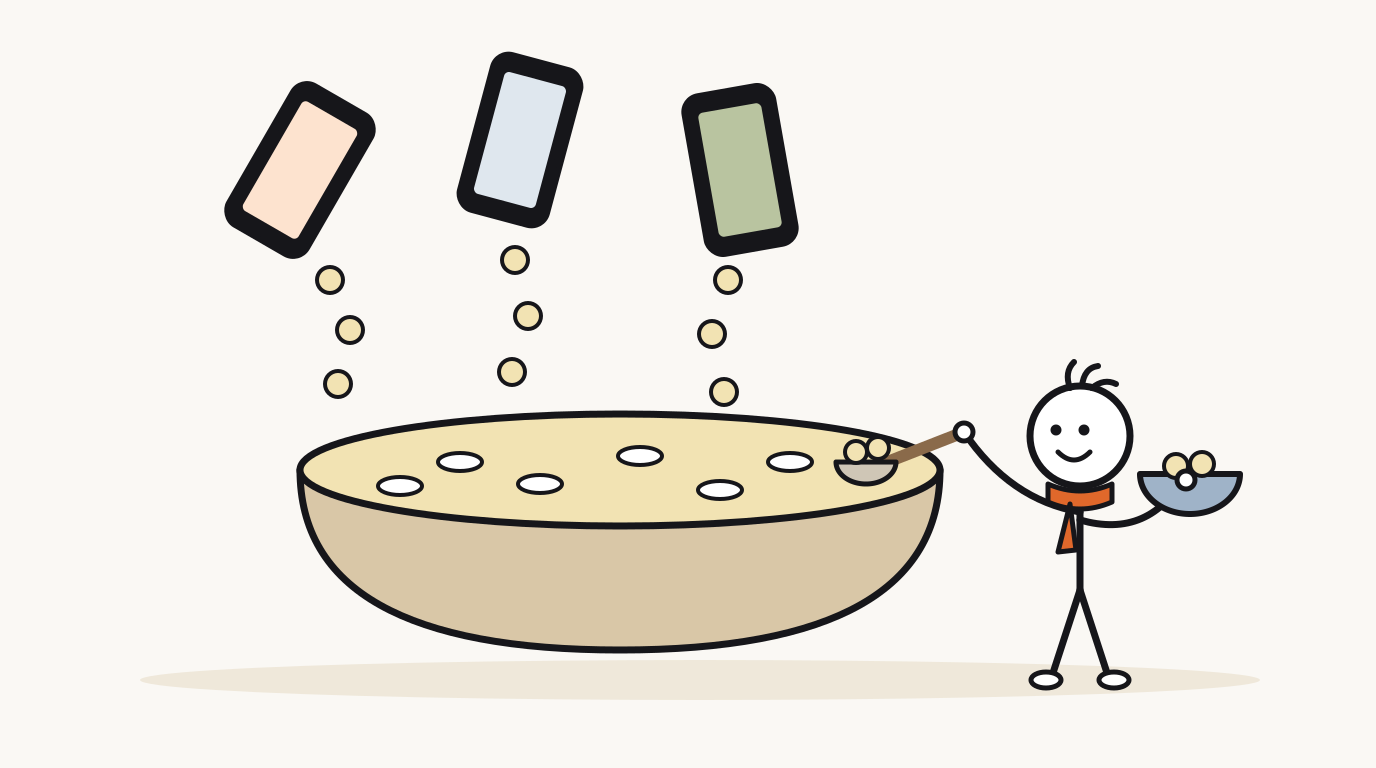
Shorts don't earn from ads placed on your own video. Each month YouTube pools the revenue from ads shown between Shorts in the Shorts feed, sets part of it aside for music licensing, divides the rest by each monetizing creator's share of engaged views in each country, and pays you 45% of your slice. To take part you need the YouTube Partner Program and its Shorts Monetization Module, and from February 1, 2027, Shorts ad revenue also requires 10 million qualified Shorts views in the last 90 days.
Who can earn money from YouTube Shorts?
There are two levels of the Partner Program, and only the higher one shares Shorts ad revenue. The lower tier, described on YouTube's expanded YPP page, unlocks fan funding and Shopping in eligible countries, including the US. The higher bar on the Partner Program overview unlocks ad and Premium revenue.
Beyond the numbers, the overview requires that you follow the monetization policies, live in a country where YPP is available, have no active Community Guidelines strikes, turn on 2-Step Verification, have advanced features, and link one AdSense account. Review typically takes about a month.
| Tier | Requirements | What it unlocks for Shorts |
|---|---|---|
| Lower tier | 500 subscribers, 3 public uploads in 90 days, and 3,000 watch hours in 12 months or 3M qualified Shorts views in 90 days | Fan funding (memberships, Super Thanks and more) and Shopping |
| Full YPP | 1,000 subscribers, and 4,000 watch hours in 12 months or 10M qualified Shorts views in 90 days | Shorts feed ad revenue and Premium revenue, once you accept the Shorts Monetization Module |
| New applicants from Feb 1, 2027 | 8,000 watch hours in 365 days or 20M qualified Shorts views in 90 days | Ads and Premium revenue sharing |
| Shorts revenue from Feb 1, 2027 | YPP member with 10M qualified Shorts views in the last 90 days | Shorts ad and subscription revenue; below it you keep earning on long-form |
How does the Shorts revenue-sharing model work?
YouTube's Shorts revenue-sharing page describes the model as a monthly pipeline. Ads aren't attached to any one Short, because they run between videos in the feed. So YouTube pools the money first and divides it afterward.
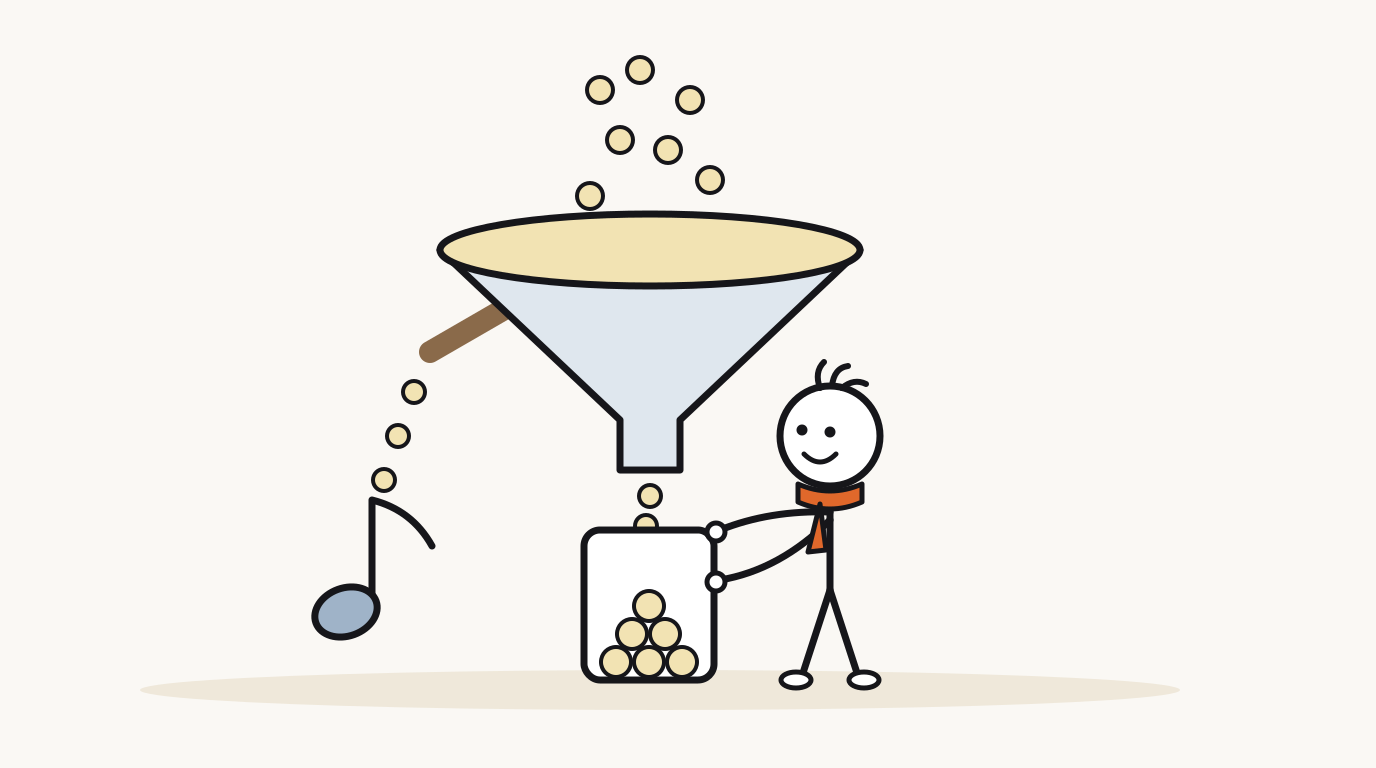
- Pool: revenue from ads shown between Shorts in the Shorts feed is added together each month.
- Music: Shorts with music split their share of revenue between the Creator Pool and music partners. One track sends half to the pool, two tracks send a third. Shorts without music send all of it to the pool.
- Allocate: the Creator Pool is divided among monetizing creators by their share of total engaged views, country by country.
- Share: you keep 45% of your allocated revenue, "regardless if music was used or not."
- Premium: you also get 45% of the net YouTube Premium revenue allocated to Shorts.
Where does the $405 in YouTube's example come from?
YouTube's help page walks through one illustrative country. The numbers are made up by YouTube to show the mechanics, so treat them as arithmetic, not as a rate to expect. Here is each step with the math shown.
- If no Short in the country used music: the pool would be $100,000, your 1% would be $1,000, and you'd earn $450.
- If half of all Shorts used one track: music would take $25,000, the pool would be $75,000, and you'd earn 45% of $750, or $337.50.
- Your own music choice changes neither number. What moves your pay is your share of views and how much the whole country's feed earns.
| Step | Number | How it's derived |
|---|---|---|
| Engaged Shorts views in Country A | 100,000,000 | Given, all from monetizing creators |
| Shorts feed ad revenue | $100,000 | Given |
| Revenue tied to Shorts with music | $20,000 | 20% of Shorts use one track: 20% of $100,000 |
| Music licensing | $10,000 | One track sends half of that $20,000 to music partners |
| Creator Pool | $90,000 | $100,000 minus $10,000 |
| Your allocation | $900 | 1,000,000 of 100,000,000 engaged views is 1% of $90,000 |
| Your earnings | $405 | 45% of $900 |
What counts as an engaged view, and why is it lower than my view count?
YouTube's explainer on qualified views defines an engaged view: "the viewer stayed to watch past the initial seconds, and does not include any loops." Qualified Shorts views for YPP eligibility must also come from public Shorts and be engaged views.
Since August 24, 2026, the public view count starts the moment a video starts playing, in every format. YouTube's metrics help page says this change won't affect Partner Program earnings or eligibility, which stay on engaged and qualified views. So your public count will now run ahead of the number you are paid on.
- Doesn't count for pay: a viewer who swipes in the first seconds, every loop after the first watch, views of private or unlisted Shorts, and views watched as an ad.
- Counts: a viewer on a public Short who stays past the opening seconds, once.
- What it means for scripts: a loop-bait ending may raise views without raising pay. A strong first line raises both.
What affects how much a Short earns?
Because pay is a share of a pool, most factors work at two levels: your share of engaged views, and the size of the pool you are sharing. The table separates what you control from what you don't.
One rule catches explainer creators by surprise. Since Shorts can run up to three minutes, YouTube's three-minute Shorts page says any Short over one minute with an active copyright claim is blocked worldwide, so it can't be watched, recommended or monetized until the claim is resolved. Shorts under one minute aren't subject to this block.
| Factor | How it works | What you can do |
|---|---|---|
| Your engaged views | Your allocation is your share of engaged views in each country. | Win the first seconds; don't count on loops. |
| Viewer countries | The pool is split country by country, and ad prices differ by viewer location. | Nothing directly. Make videos for the audience you want. |
| Time of year | The RPM page lists time of year as a reason ad rates change. | Expect monthly swings and judge over a quarter. |
| Music across the feed | More music use shrinks the pool for everyone; your 45% rate stays. | Use music when it helps the video, not to game the pool. |
| Originality | Non-original Shorts, like unedited clips or compilations, are excluded. | Make your own pictures and narration. |
| Advertiser-friendly content | Views of Shorts that don't meet the guidelines are excluded. | Keep shock and graphic detail out of the frame. |
| Copyright claims | A Short over one minute with an active claim is blocked and earns nothing. | Avoid claimed music in Shorts longer than a minute. |
What changes for Shorts monetization on February 1, 2027?
YouTube announced on August 10, 2026 that from February 1, 2027, ads and subscription revenue on Shorts will go to creators with 10 million qualified Shorts views over the last 90 days. Channels below that stay in YPP and keep earning on long-form, and Shorts revenue resumes automatically when they cross the threshold again.
The same post raises the entry bar for new applicants to 8,000 watch hours in 365 days or 20 million qualified Shorts views in 90 days, says the update won't affect creators already in YPP, and keeps fan funding and Shopping thresholds unchanged. It also promises milestone-based bonuses for smaller channels, with details to come. The revenue-sharing page adds that Shorts ads targeted to small groups of 5 or fewer channels will pay creators 45% of net revenue directly.
The bar is high. 10 million views in 90 days is about 111,000 qualified views a day. A channel posting four Shorts a week makes about 51 in 90 days, so each would need about 196,000 qualified views on average.
How else can Shorts make money?
For most explainer channels, the Shorts pool will be the smallest line on the statement, and from 2027 it may be zero. Shorts still earn indirectly. YouTube's earnings overview pays 55% of net ad revenue on long-form videos on the watch page, and 70% of net revenue from memberships, Super Chat, Super Stickers and Super Thanks.
That makes a Short's best job sending the right viewer to a long video. Link each Short to a long-form video with the Related video setting, and make sure that video answers the bigger question the Short raised. Our comparison of Shorts vs long-form shows how to plan the two together.
- Related video: points Shorts viewers to a long video where watch-page ads pay 55%.
- Fan funding: memberships and Super Thanks open at the lower tier, at a 70% share.
- Shopping: product tags open at the lower tier in eligible countries.
- Your own offers: a course, a book or client work, promoted in the description.
Questions
How much does YouTube pay for 1 million Shorts views?
There is no fixed rate. Pay depends on your share of engaged views in each country, how much the Shorts feed earned there that month, and how much of the feed used music. In YouTube's own illustrative example, 1 million engaged views in a made-up country earn $405, but the totals in that example are invented.
Do Shorts views count toward YouTube monetization?
Yes, on their own route. As of October 2026, 1,000 subscribers plus 10 million qualified Shorts views in 90 days qualifies a channel for ad revenue sharing. Watch hours from the Shorts feed don't count toward the separate 4,000-hour route.
Does using music lower my Shorts earnings?
Not your rate. YouTube says you keep 45% of your allocated revenue whether or not you use music. Music use across all Shorts reduces the size of the Creator Pool, which affects every creator in that country equally.
Can I monetize Shorts with fewer than 1,000 subscribers?
Partly. In eligible countries, the lower Partner Program tier (500 subscribers, 3 uploads in 90 days, and 3,000 watch hours or 3 million Shorts views) unlocks fan funding and Shopping. Shorts ad revenue needs the full program.
Do AI-made Shorts get paid?
They can, if they're original. YouTube excludes non-original Shorts from the pool and won't monetize mass-produced, templated content. Our guide on whether AI content is allowed on YouTube covers what reviewers look for.
Make your first stickman video
StickTale is in private beta. Join the waitlist and we’ll send your invite as soon as a spot opens.