Scripting
Storytelling Techniques for YouTube Videos: 6 Moves for Explainers, With Rewrites

By the StickTale team
· 10 min read
The storytelling techniques that work best in YouTube explainers are structural, not decorative: connect every beat with "but" or "therefore" instead of "and then", make the stakes concrete, put a person at the center, let the viewer believe the wrong explanation before the turn, and end on a callback. You can apply all of them to a script you already have. Below, each technique comes with a before and after, and one story is rewritten from start to finish.
Why do explainer videos need storytelling at all?
Explainers are full of facts, and facts arrive in a natural order: background, then events, then results. Narrated in that order, they form a list. A list gives the viewer no reason to want the next item, so attention drifts, and in YouTube's retention report that shows up as dips, which YouTube describes as the points where viewers are abandoning or skipping.
Storytelling fixes the order, not the facts. Every technique below rearranges or connects true information so that each beat creates a question the next beat answers. Nothing gets invented. For the examples, this post uses one true story throughout: the Great Stink of London in 1858.
How does the "but and therefore" rule work?
The rule comes from the South Park creators. Trey Parker and Matt Stone describe checking the beats of a story for the words "and then"; wherever they find them, they look for a way to make the link a "therefore" or a "but" instead, so each event causes or complicates the next.
For an explainer, this is a test you can run on any outline. Write your beats as single sentences in a column, then read the word between each pair. "And then" means the second beat would be just as true without the first. "Therefore" means it follows from it, and "but" means it pushes against it.
| Beat | "And then" version | "But / therefore" version |
|---|---|---|
| 1 | London's sewers emptied into the Thames. | London's sewers emptied into the Thames, which people had lived with for years. |
| 2 | And then summer 1858 was hot. | But that summer was hot and dry, the river shrank, and sewage baked on the banks. |
| 3 | And then Parliament complained about the smell. | Therefore the smell reached Parliament, which soaked its curtains in chloride of lime. |
| 4 | And then they passed a law. | But the curtains didn't work, therefore within about seven weeks a sewer bill became law. |
| 5 | And then Bazalgette built sewers. | Therefore Joseph Bazalgette got the money to build 82 miles of main sewers. |
How do you add stakes to an explainer?
Stakes answer "so what?" before the viewer asks it. A fact without stakes is something to know; a fact with stakes is something that could go wrong for someone. The fastest test: can you say who loses, what they lose, and how soon?
Stakes don't need to be dramatic. They need to be concrete. "The river was polluted" has no one in it. "Parliament couldn't use its own building" has a loser, a loss and a deadline, because MPs were discussing moving government business to Oxford or St Albans.
| Flat | With stakes | Who loses, what, when |
|---|---|---|
| The Thames smelled bad in 1858. | The smell got so bad that Parliament talked about leaving London. | The government, its building, that summer. |
| Cholera was common in Victorian London. | In 1866, cholera killed 5,596 people in a part of East London not yet on the new sewers. | A neighborhood, its people, within weeks. |
| Credit card interest compounds. | Leave $2,000 on a card at 24% a year, pay nothing, and you owe about $2,536 a year later. | You, $536, in twelve months. |
Why put a person at the center of the story?
Viewers follow people more easily than systems. In a study by Deborah Small, George Loewenstein and Paul Slovic, a letter about one named girl, Rokia, drew more donations than a letter full of statistics about millions of people. Be careful with how far you push that finding: a 2024 preregistered replication found no support for the effect.
You don't need the research to make the craft point, though. A person gives the viewer a point of view: someone who wants something and runs into an obstacle. In the Great Stink, that person is Joseph Bazalgette, the engineer with a plan that had to wait for a crisis.
- A historical figure: the person who decided, built, discovered or failed.
- An ordinary witness: a resident, a worker, a patient. Use a real one if your source names them; label a composite as a composite.
- The viewer: "You're an MP in 1858. You open the window." Second person works well in Shorts.
- Your recurring character: in a stick-figure channel, one character who reacts to every fact. See keeping one AI character consistent.
How do you use a turn in an explainer?
A turn is the moment the viewer realizes the explanation they've been holding is wrong or incomplete. To build one, let the viewer believe the common explanation first. Present it fairly, as the people in the story believed it. Then reveal what they missed.
The Great Stink has a strong turn. The sewers were built to remove the smell, because most experts believed in miasma, the idea that diseases like cholera spread through bad air. John Snow had argued in 1849 that cholera spread through water, and few listened. The sewers took sewage away from the water anyway, so they worked for the wrong reason.
How do callbacks make an ending land?
A callback brings an image, word or line from early in the video back at the end, with a new meaning. It tells the viewer the story was planned, and it turns the last line into a small "oh" instead of a fade-out.
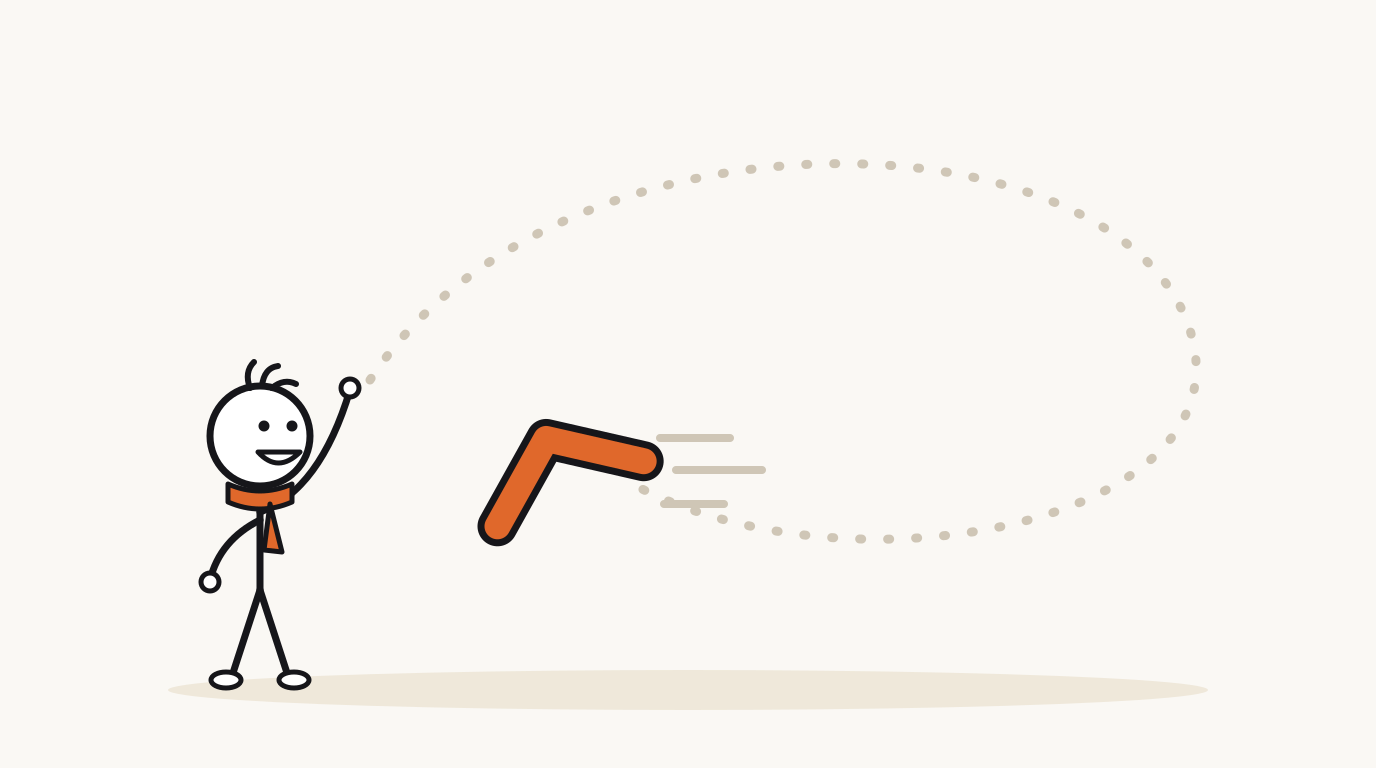
Plant the callback in the first 20 percent of the script, and make it physical if you can. Stick-figure explainers are built on pictures, so a callback to an image (the curtains, the window, the river) lands even on mute.
| Plant (early) | Payoff (last line) |
|---|---|
| "Parliament couldn't breathe." | "London built the cure for the wrong reason, because Parliament couldn't stand the smell." |
| Curtains soaked in chloride of lime. | "The curtains never stopped anything. The bricks did." |
| "The river was the problem." | "The river was the problem. Just not the part they could smell." |
A full before and after: the Great Stink as a Short
Here is the story told as a list, which is how a first draft often reads: "In 1858, London had a sewage problem. The Thames was full of waste. That summer was hot, and the smell was very bad. Parliament passed a law to build new sewers. Joseph Bazalgette designed them, using 318 million bricks. Afterwards, cholera outbreaks stopped."
Every fact in it is true, and none of it pulls. Below is the same material with all six techniques applied. It is 163 words, about 65 seconds at 2.5 words a second, so it suits a slightly longer Short or the opening of a long video. Facts come from the Great Stink article and its sources.
- But / therefore: lines 2, 6 and 8 are explicit links; line 4 is a "therefore" in disguise ("so").
- Stakes: line 5 puts the government itself at risk.
- Person: Bazalgette in line 7, Parliament as a group throughout.
- Turn: lines 8 and 9 overturn the reason everyone believed.
- Callback: the last line returns to "couldn't breathe" and the smell.
How a bad smell saved London
- 1858In the summer of 1858, the British Parliament couldn't breathe.
- London's sewers emptied straight into the Thames. People had lived with that for years. But that summer was hot and dry, and the river shrank.
- THE THAMESRaw sewage baked on the banks, right under Parliament's windows.
- CHLORIDE OF LIMESo they soaked the curtains in chloride of lime. It didn't work.
- OXFORD?MPs talked about moving the government out of London.
- 7 WEEKSTherefore, a sewer bill tabled in mid-June was law by early August.
- 318 MILLION BRICKSThe engineer, Joseph Bazalgette, planned 82 miles of main sewers, built with 318 million bricks.
- BAD AIR?But here's the turn. They were fighting the smell, because most experts thought bad air caused cholera.
- It didn't. Cholera spread through dirty water. And the sewers carried the sewage away from the water anyway.
- 1866In 1866, cholera killed 5,596 people in a part of East London not yet connected. It was the city's last outbreak.
- London built the cure for the wrong reason, because Parliament couldn't stand the smell.
Storytelling checklist for your next explainer script
Run your outline through these checks before you write full sentences. Changing the order of beats is cheap in an outline and expensive in a finished script. Then make sure your first line earns the rest, using the hook formulas for explainer Shorts.
- Write each beat as one sentence and read the link between every pair. Fewer than one in five should be "and then".
- Name who loses, what, and how soon, within the first third.
- Pick the person at the center, and introduce them by what they want.
- Find the explanation people believed, state it fairly, then turn it with a sourced fact.
- Plant one image in the first 20 percent and bring it back in the last line.
- Cut any beat that doesn't change what the viewer knows or wants to know.
Questions
What is the "but and therefore" rule?
A rule described by South Park creators Trey Parker and Matt Stone: the beats of a story should be linked by "but" or "therefore", not "and then". Each event should cause or complicate the next, which turns a list of facts into a chain of cause and effect.
How do you tell a story in an educational YouTube video?
Keep the facts and change their order and links. Start with the strangest moment, give the viewer a person to follow, connect beats with "but" and "therefore", let them believe the common explanation before you turn it, and end with a callback to the opening.
What is a callback in storytelling?
A callback brings back a line, word or image from early in the story at the end, usually with a new meaning. In explainers, the last line often echoes the hook so the ending feels planned rather than abrupt.
Do faceless channels need a character?
They need a point of view, which can be a historical person, an ordinary witness, the viewer addressed as "you", or a recurring illustrated character. A consistent character helps viewers recognize your videos, but the person at the center of each story can change.
How do I make a boring topic interesting?
Find who was affected and what they stood to lose, then look for the belief people held that turned out to be wrong. Almost every topic has a moment where someone was surprised, and that moment is where the story starts.
Make your first stickman video
StickTale is in private beta. Join the waitlist and we’ll send your invite as soon as a spot opens.