Scripting
YouTube Shorts Script Template: A Fill-In Plan for 45 to 60 Seconds, With 3 Examples

By the StickTale team
· 9 min read
A YouTube Shorts script template is a fixed set of beats with a word budget for each. For a 45 to 60 second explainer, write 110 to 150 words in seven beats: hook, gap, first answer, complication, key detail, payoff and callback. Fill in the brackets below, then check your draft against three complete examples from history, science and personal finance.
How long should a YouTube Shorts script be?
YouTube now lets you upload Shorts up to 3 minutes long, as long as the video is square or vertical. That doesn't mean an explainer should use all of it. A single "why" question usually has one answer, and 45 to 60 seconds is enough to set it up, complicate it and pay it off without padding.
Plan in words. At a calm narration pace of about 2.5 words a second (150 a minute), 45 seconds is about 112 words and 60 seconds is 150. Time yourself reading any paragraph of 150 words; if it takes 66 seconds, you speak about 10% slower, so aim 10% shorter.
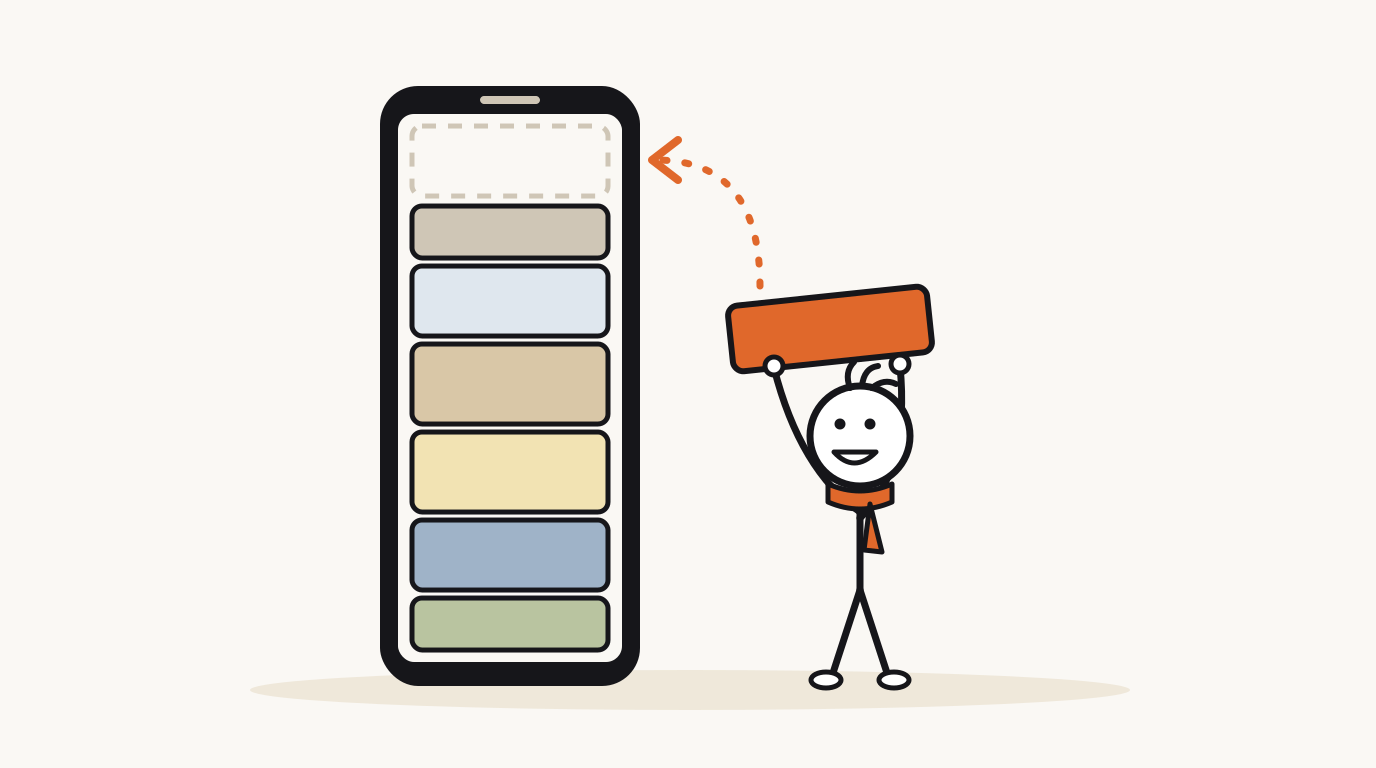
The same math gives you a picture count. If a new picture appears every ~5 seconds, a 60-second Short needs about 12 pictures, each carrying about 12 words of narration.
The YouTube Shorts script template, beat by beat
Here are the seven beats with their timing and word budget at both lengths. The 45-second column is the 60-second budget times 0.75, rounded.
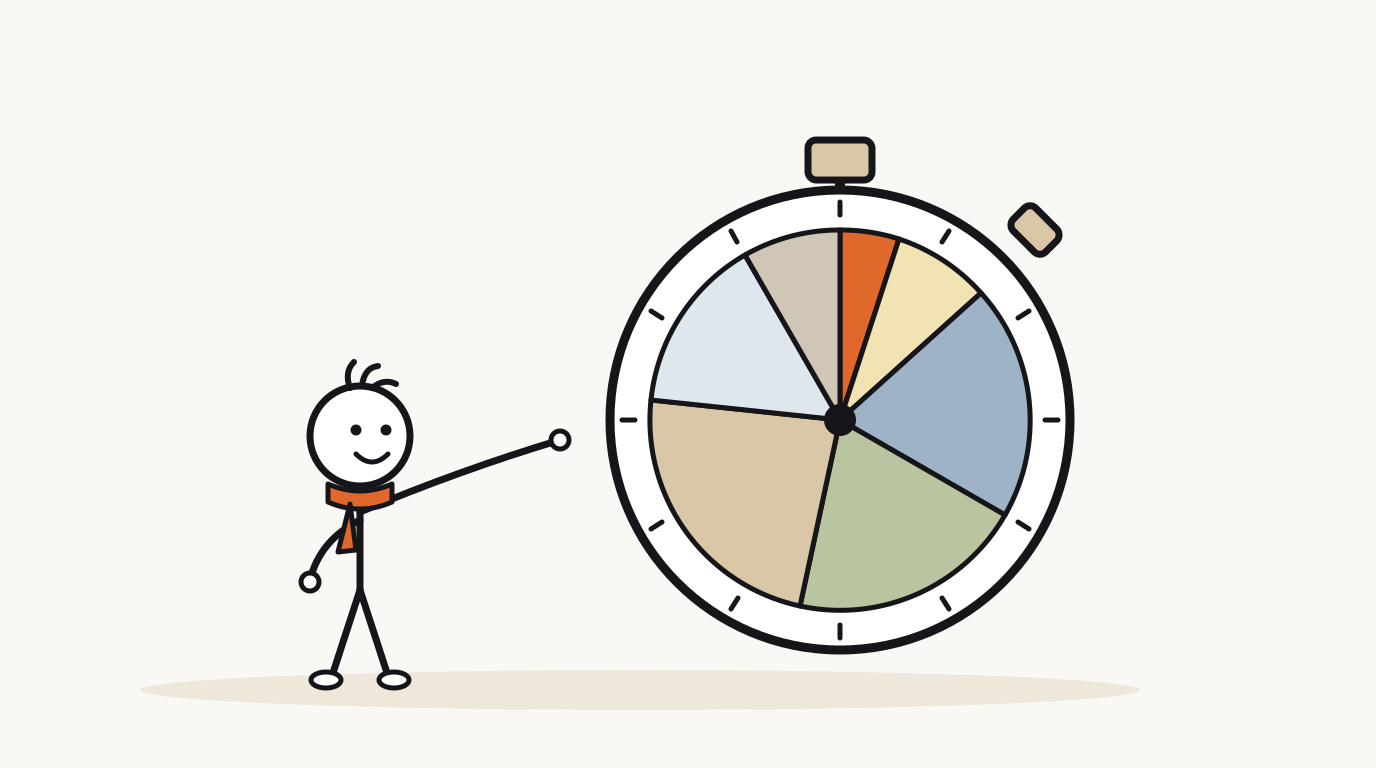
The fill-in line is a starting shape, not a rule. What matters is the job of each beat: if a line does the job in fewer words, take the savings.
| Beat | 60 s version | 45 s version | Fill-in line | Job |
|---|---|---|---|---|
| 1. Hook | 0 to 3 s, ~7 words | ~5 words | [Strange true fact or question about SUBJECT]. | Stop the swipe. |
| 2. Gap | 3 to 8 s, ~12 words | ~9 words | Most people think [COMMON ANSWER]. It's not that. | Make the viewer need the real answer. |
| 3. First answer | 8 to 20 s, ~30 words | ~23 words | It starts with [FIRST HALF OF THE ANSWER]. | Give real information early. |
| 4. Complication | 20 to 32 s, ~30 words | ~23 words | But [DETAIL THAT MAKES THE FIRST ANSWER INCOMPLETE]. | Reopen the question. |
| 5. Key detail | 32 to 46 s, ~35 words | ~26 words | The answer is [SPECIFIC PERSON, NUMBER OR MECHANISM]. | The fact they'll repeat to a friend. |
| 6. Payoff | 46 to 55 s, ~22 words | ~17 words | So [FULL ANSWER IN ONE SENTENCE]. | Close the loop clearly. |
| 7. Callback | 55 to 60 s, ~12 words | ~9 words | [LINE THAT ECHOES THE HOOK WITH A NEW MEANING]. | Make the end feel earned. |
What to fill in before you write the script
Most bad Shorts scripts go wrong before the first sentence, because the writer starts drafting with a topic instead of an answer. Fill in these five lines first. If you can't fill one, research more before writing.
- The question: one "why" or "how" question a curious person would type. "Why is a marathon 26.2 miles?", not "marathon history".
- The answer in one sentence: if it takes two, the topic is two Shorts.
- The wrong answer people believe: this becomes beat 2.
- The strangest true detail, with its source: this becomes beat 1 or beat 5.
- The callback: a word or image from the hook that can return in the last line with a new meaning.
Example 1 (history): Why is a marathon 26.2 miles?
The planning lines: the wrong answer is the Greek messenger legend, which explains the name but not the number. The real answer is the course of the 1908 London Olympics, which started at Windsor Castle and finished in front of the Royal Box, a distance later made official in 1921.
The script below is 138 words, so it runs about 55 seconds. Labels are the hand-lettered words on screen.
- Beat 2 kills the legend fast instead of retelling it, which saves about 20 words.
- Beat 4 ("nobody had fixed an exact distance") is the complication that makes 1908 matter.
- Beat 7 turns "castle" from the hook into a physical place on the course.
Why is a marathon 26.2 miles?
- 26.2 MILESThe marathon is 26.2 miles because of a castle.
- You've heard about the Greek messenger who ran from Marathon to Athens. He explains the name. Not the number.
- 1896The first Olympic marathon, in Athens in 1896, was about 40 kilometers. Roughly 25 miles. Early races stayed around that, give or take.
- But nobody had fixed an exact distance. Each race was simply as long as its course.
- WINDSOR CASTLEThen came London, 1908. Organizers planned the course to start at Windsor Castle.
- ROYAL BOXAnd to finish on the stadium track, right in front of the Royal Box.
- 42.195 KMCastle to box came out at 26 miles and 385 yards. That's 42.195 kilometers.
- 1921In 1921, the sport's governing body made that the official marathon distance.
- So the final 385 yards, the part every runner dreads, are there because of where the royals sat.
Example 2 (science): Why do onions make you cry?
The planning lines: the common assumption is that onion juice splashes your eyes. The real answer is a chain reaction: cutting rips the onion's cells open, enzymes turn a sulfur compound into a gas, and that gas becomes a weak acid in your eyes. The chemistry here follows this explainer in The Conversation.
This one is 145 words, about 58 seconds. Notice that the complication arrives as a second enzyme: the first answer is true but incomplete.
Why do onions make you cry?
- DEFENSEOnions don't make you cry by accident. They're defending themselves.
- A whole onion on the counter does nothing to your eyes. The tears only start when the knife goes in.
- ENZYMECutting rips open the onion's cells. Out comes a sulfur compound, plus an enzyme that turns it into an acid.
- SECOND ENZYMEBut that acid isn't what reaches your eyes. A second enzyme grabs it and turns it into a gas.
- Its name is propanethial S-oxide. It floats up and lands in the thin layer of moisture on your eyes.
- WEAK ACIDThere it forms a weak acid. Not enough to harm you. Just enough to irritate.
- Your eyes respond the only way they can: they flood the spot with tears to wash it out.
- PESTSThe whole system exists to stop pests from eating the onion.
- So you're not crying over the onion. You're crying because it fought back.
Example 3 (personal finance): How long does money take to double?
The planning lines: the answer is the rule of 72: divide 72 by the yearly rate to estimate the years it takes to double. The complication is that it also works against you, for fees. This Short teaches arithmetic, not investment advice, and the script keeps it that way.
The numbers are derived, so you can check them: 72 ÷ 8 = 9 years; the exact figure at 8% is 9.006 years, and 0.006 of a year is about 2 days. At 50%, the rule gives 1.44 years against an actual 1.71, a gap of about 3 months. This script is 124 words, about 50 seconds.
How long does it take money to double?
- 72 ÷ RATEWant to know when your money doubles? Divide 72 by the interest rate.
- No spreadsheet. No app. Just one number.
- 8% = 9 YEARSSay your savings earn 8% a year. 72 divided by 8 is 9. About nine years to double.
- 2 DAYSThe exact answer is 9.006 years. The shortcut is off by about two days.
- FEESBut the rule cuts both ways, because fees compound too.
- 24 YEARSA 3% yearly fee halves an account in about 72 divided by 3. That's 24 years.
- Why 72? It divides evenly by 2, 3, 4, 6, 8, 9 and 12, so the math stays in your head.
- It's most accurate for rates around 6 to 10%. At 50%, it's off by months.
- So the number to remember isn't your balance. It's 72.
How do you adapt the template to other lengths?
The seven beats stretch and shrink by changing the middle, never the ends. The hook and callback stay short at every length because their job doesn't grow with the runtime.
| Target | Words | What changes |
|---|---|---|
| 30 s | about 75 | Merge beats 3 and 4 into one "first answer, but" line. Keep the hook and callback. |
| 45 s | about 112 | All seven beats at 75% of the 60-second budget. |
| 60 s | about 150 | The full template as written. |
| 90 s | about 225 | Add a second complication and key detail after beat 5, before the payoff. |
| 2 to 3 min | 300 to 450 | Use the chapter structure from a long-form explainer script instead. |
Common mistakes when filling in a Shorts template
Templates make drafting faster, and they also make some mistakes faster. These are the ones that show up most when the brackets get filled in a hurry.
If you make Shorts with StickTale, the script is drafted to a similar plan (a hook in the first line, an open loop, escalation, a twist and a payoff that calls back to the hook) and fact-checked against its research notes. Use the list below as your edit pass on that draft, and rewrite any line in the editor; it gets re-voiced automatically.
- A greeting in beat 1. "Hey everyone" uses the most valuable two seconds of the Short.
- Answering in beat 2. If the full answer comes at second 5, the viewer has no reason to stay for second 30.
- A complication that isn't one. "And there's more" is not a "but". Beat 4 must make the first answer incomplete.
- Numbers without a source. Every number on screen should trace to a page you opened.
- A callback that only repeats. Echo a word from the hook, but give it a new meaning, like "castle" or "72" above.
- Lines nobody can picture. If a line can't become one clear drawing, rewrite it until it can.
Questions
How many words is a 60-second YouTube Short script?
About 150 words at a calm narration pace of 2.5 words a second. A 45-second Short is about 112 words. Faster narrators fit more, so time one paragraph in your own voice and adjust.
How long can a YouTube Short be?
YouTube's help center says Shorts can be up to 3 minutes long with a square or vertical aspect ratio. Most single-question explainers still fit best in 45 to 60 seconds.
What is the best structure for a YouTube Short?
For explainers: a hook, a gap that names the wrong answer, a first answer, a complication, the key detail, the payoff, and a callback to the hook. The complication is what keeps the middle moving.
Should a YouTube Short have a call to action?
In a 45-60 second explainer, a callback ending usually serves better than a spoken call to action, because it makes the video feel complete. If you want one, keep it to a few words after the payoff, or put it in the description or a pinned comment.
Can I use the same script template for TikTok and Reels?
Yes. The seven beats don't depend on the platform. What changes is mostly length and on-screen text placement, covered in repurposing Shorts for TikTok and Reels.
Make your first stickman video
StickTale is in private beta. Join the waitlist and we’ll send your invite as soon as a spot opens.